Consumer healthcare e-commerce in Saudi Arabia is no longer the “nice to have” slide buried in your annual plan. It is the fastest-growing channel in the entire KSA health and wellness market, and the brands that treat it as an afterthought are watching their competitors build an insurmountable advantage. I see it every quarter — brands with strong pharmacy distribution and solid offline sell-out are losing share to nimbler competitors who have cracked the e-commerce code.
I have spent over 20 years building pharmaceutical and consumer healthcare brands across the GCC, including launching and scaling e-commerce operations for dermocosmetics, OTC products, and wellness brands on every major platform in Saudi Arabia. What follows is the playbook I wish I had when I started — the strategic decisions, the operational details, and the hard-won lessons that separate brands that sell online from brands that win online.
This is not a high-level overview. It is a working document built from real P&L management, real platform negotiations, and real mistakes that cost real money.
SAR 3B+
KSA consumer healthcare e-commerce market size in 2025
35%
Year-on-year growth in online pharmacy sales in Saudi Arabia
68%
Of KSA consumers check product reviews online before buying health products
4×
Higher conversion rate for products with A+ content vs. basic listings
Table of Contents
- Why E-Commerce Is the Fastest-Growing Channel for Consumer Healthcare in KSA
- The KSA E-Commerce Healthcare Landscape
- Building Your E-Commerce Strategy: D2C vs Marketplace vs E-Retailer
- Product Listing Optimization
- Digital Shelf Management
- E-Retailer Marketing Activations
- Last-Mile Challenges for Healthcare Products
- E-Commerce Analytics and KPIs
- Building an E-Commerce Team for Pharma and CHC
- Frequently Asked Questions
Why E-Commerce Is the Fastest-Growing Channel for Consumer Healthcare in KSA
The numbers tell a clear story. Online sales of consumer healthcare products in Saudi Arabia grew by over 32% year-over-year in 2025, outpacing every other retail channel. E-pharmacy and health product platforms now represent an estimated 12–15% of total CHC sales in the Kingdom, up from less than 4% in 2020. By 2028, that number is projected to exceed 25%.
Several forces are driving this acceleration, and none of them are reversible:
- Vision 2030’s digital health agenda.The Saudi government is actively building digital infrastructure across healthcare. SFDA’s e-pharmacy licensing framework has legitimized online health product sales and created a regulated marketplace that both consumers and brands can trust.
- Demographic tailwinds.Over 70% of Saudi Arabia’s population is under 35. This is a generation that grew up ordering everything on their phones. They do not distinguish between ordering food delivery and ordering vitamins — it is all the same behavioral muscle.
- Smartphone penetration exceeding 98%.Saudi Arabia has one of the highest smartphone adoption rates globally. Mobile commerce is not a subset of e-commerce here — it is e-commerce. Over 85% of health product orders are placed on mobile devices.
- Post-COVID behavioral permanence.The pandemic forced trial. Convenience kept people coming back. Consumers who started buying health products online during 2020–2021 have not returned to their pre-pandemic habits.
- Platform maturity.Amazon.sa, Noon, Nahdi Online, Al-Dawaa, and specialized platforms like Sehha have all invested heavily in health product infrastructure — cold chain logistics, SFDA-compliant product information systems, and health-specific customer support.
The brands that will own the consumer healthcare market in KSA over the next five years are the ones investing in e-commerce capabilities today — not the ones waiting to see if the trend is real.
Here is what makes this channel particularly attractive for CHC brands: the economics are different. In traditional pharmacy retail, you are paying trade margins of 25–35% to distributors and retailers, plus investing in in-store visibility programs. Online, while platform commissions exist, you have direct access to consumer data, the ability to test pricing in real time, and significantly lower per-unit customer acquisition costs once your organic search ranking is established.
The KSA E-Commerce Healthcare Landscape
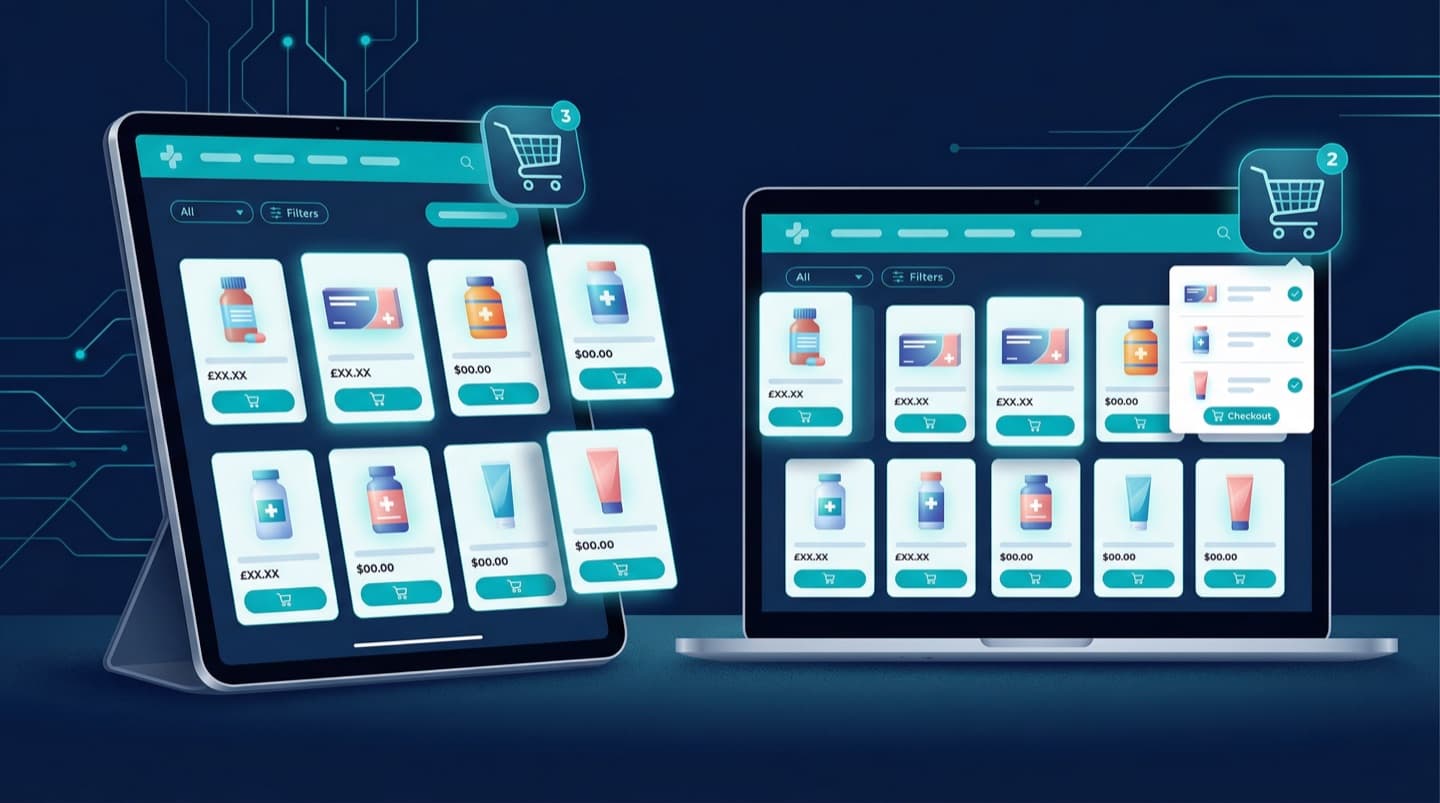
Before you build a strategy, you need to understand the playing field. The KSA e-commerce healthcare ecosystem is not a single marketplace — it is a layered landscape with distinct platform types, each serving different strategic purposes.
Amazon.sa
Amazon.sa is the dominant horizontal marketplace in Saudi Arabia and the single most important platform for consumer healthcare brands. It offers the largest addressable audience, the most sophisticated advertising infrastructure (Amazon Ads), and the strongest fulfillment network (FBA — Fulfillment by Amazon). For vitamins, supplements, skincare, oral care, and OTC products, Amazon.sa is where most consumers start their search.
The challenge with Amazon is complexity. You need to manage your catalog, pricing, Buy Box strategy, A+ content, advertising spend, and review generation simultaneously. It is not a “list and forget” platform.
Noon
Noon is the regional alternative to Amazon, with particularly strong traction in Saudi Arabia and the UAE. Its health and beauty category has grown aggressively, and Noon’s marketing events — Yellow Friday, Noon Minutes flash sales — drive significant volume spikes. Noon’s fulfillment by Noon (FBN) service has improved considerably, making it a viable primary or secondary channel for CHC brands.
Noon tends to be more promotion-driven than Amazon. Brands that succeed on Noon are the ones willing to participate actively in platform campaigns and promotional calendars.
Nahdi Online
Nahdi is not just a pharmacy chain — it is Saudi Arabia’s largest health and beauty retailer, and its online platform has become a serious e-commerce destination. Nahdi Online benefits from massive brand trust, an integrated loyalty program (Nuhdeek), and the ability to blend online ordering with physical store fulfillment. For dermocosmetic and premium health brands, Nahdi Online offers a curated environment that communicates quality.
Working with Nahdi Online is fundamentally different from working with a horizontal marketplace. You are partnering with a retailer that controls the curation, pricing presentation, and promotional cadence. Your influence is through trade terms, joint business planning, and marketing investment — similar to the offline relationship but with digital-first execution.
Al-Dawaa Digital
Al-Dawaa has been investing in its digital presence, and while it trails Nahdi in overall e-commerce sophistication, its reach across the Kingdom — particularly in secondary and tertiary cities — gives it a distribution advantage. Al-Dawaa’s app and online ordering system cater to a slightly different demographic: more value-conscious, more family-oriented, and more heavily concentrated outside of Riyadh and Jeddah.
Sehha and Specialized E-Pharmacies
Sehha and other licensed e-pharmacy platforms focus specifically on health products, including prescription medications. For consumer healthcare brands, these platforms offer a more targeted audience — people who are specifically shopping for health products, not browsing a general marketplace. The downside is smaller audience size, but the conversion rates tend to be significantly higher.
United Pharmacy
United Pharmacy has expanded its digital footprint with online ordering and delivery across major Saudi cities. While smaller than Nahdi and Al-Dawaa, United Pharmacy appeals to a loyal customer base and offers competitive terms for brands looking to diversify their e-retailer mix. Its app-based ordering system is gaining traction, particularly in the central and eastern provinces.
| Platform | Type | Best For | Key Consideration |
|---|---|---|---|
| Amazon.sa | Horizontal Marketplace | Volume, discoverability, FBA logistics | Requires dedicated ad spend and catalog management |
| Noon | Horizontal Marketplace | Promotional volume, regional reach | Promotion-heavy; plan for margin pressure |
| Nahdi Online | E-Retailer (Pharmacy) | Premium positioning, loyalty integration | Retailer-controlled; relationship-driven |
| Al-Dawaa | E-Retailer (Pharmacy) | Reach beyond Tier 1 cities | Value-oriented audience |
| Sehha | Specialized E-Pharmacy | High-intent health shoppers | Smaller audience, higher conversion |
| United Pharmacy | E-Retailer (Pharmacy) | Central/Eastern province reach | Growing digital presence, loyal base |
Platform Benchmark
E-Commerce Channel Performance for Consumer Healthcare in KSA
Score out of 10 — based on healthcare category suitability, logistics reliability, and consumer trust in KSA
Building Your E-Commerce Strategy: D2C vs Marketplace vs E-Retailer
The first strategic decision every consumer healthcare brand needs to make is where to play — and how to allocate resources across three fundamentally different e-commerce models.
Direct-to-Consumer (D2C)
Building your own e-commerce storefront gives you full control over pricing, branding, customer data, and the shopping experience. For premium dermocosmetic brands or specialized supplement lines, D2C can be a powerful positioning tool. You own the customer relationship, you can build subscription models, and you control the narrative.
The downside is traffic acquisition. In a market dominated by Amazon.sa and Noon, driving consumers to your own storefront is expensive. You are competing for attention against platforms with massive marketing budgets and established shopping habits. If you go the D2C route, you need a serious content marketing and paid acquisition strategy. Tools like Systeme.io make it feasible to build landing pages, sales funnels, and email sequences for your D2C operation without needing a dedicated development team — the free tier alone supports up to 2,000 contacts.
Marketplace Model
Selling on Amazon.sa and Noon gives you access to their massive audiences and established logistics infrastructure. You list your products, manage your catalog, run advertising, and the platform handles payments and often fulfillment. The tradeoff is margin compression (platform commissions range from 8–20% depending on the category) and limited access to customer data.
For most consumer healthcare brands entering KSA e-commerce, the marketplace model is the right starting point. It lets you learn the dynamics of online selling — search behavior, pricing sensitivity, review management — without the overhead of building your own platform.
E-Retailer Partnerships
Working with Nahdi Online, Al-Dawaa, or United Pharmacy is closer to a traditional retail relationship. You sell to the retailer (or through their platform on consignment), and they manage the consumer experience. The benefit is brand environment control — pharmacy e-retailers curate their assortment, so your products sit alongside credible health brands, not discount knockoffs. The limitation is less direct control over pricing, promotions, and product presentation.
The Optimal Approach: Multi-Channel with Clear Role Assignment
The most successful CHC brands in KSA e-commerce do not pick one channel — they build a multi-channel strategy where each platform plays a defined role:
- Amazon.sa: Volume driver, discoverability engine, and consumer data source
- Noon: Promotional volume capture and regional event participation
- Nahdi Online: Premium positioning, pharmacist credibility, loyalty integration
- D2C (if applicable): Brand storytelling, education content, subscription/repeat purchase
The key is managing channel conflict. You need consistent pricing across platforms (or a clear rationale for differences), coordinated promotional calendars, and distinct content strategies for each channel. I use Notion as my central hub for tracking multi-channel e-commerce campaigns, promotional calendars, and platform-specific KPIs across all active channels. It keeps the team aligned when you are managing four or five platforms simultaneously.
Product Listing Optimization
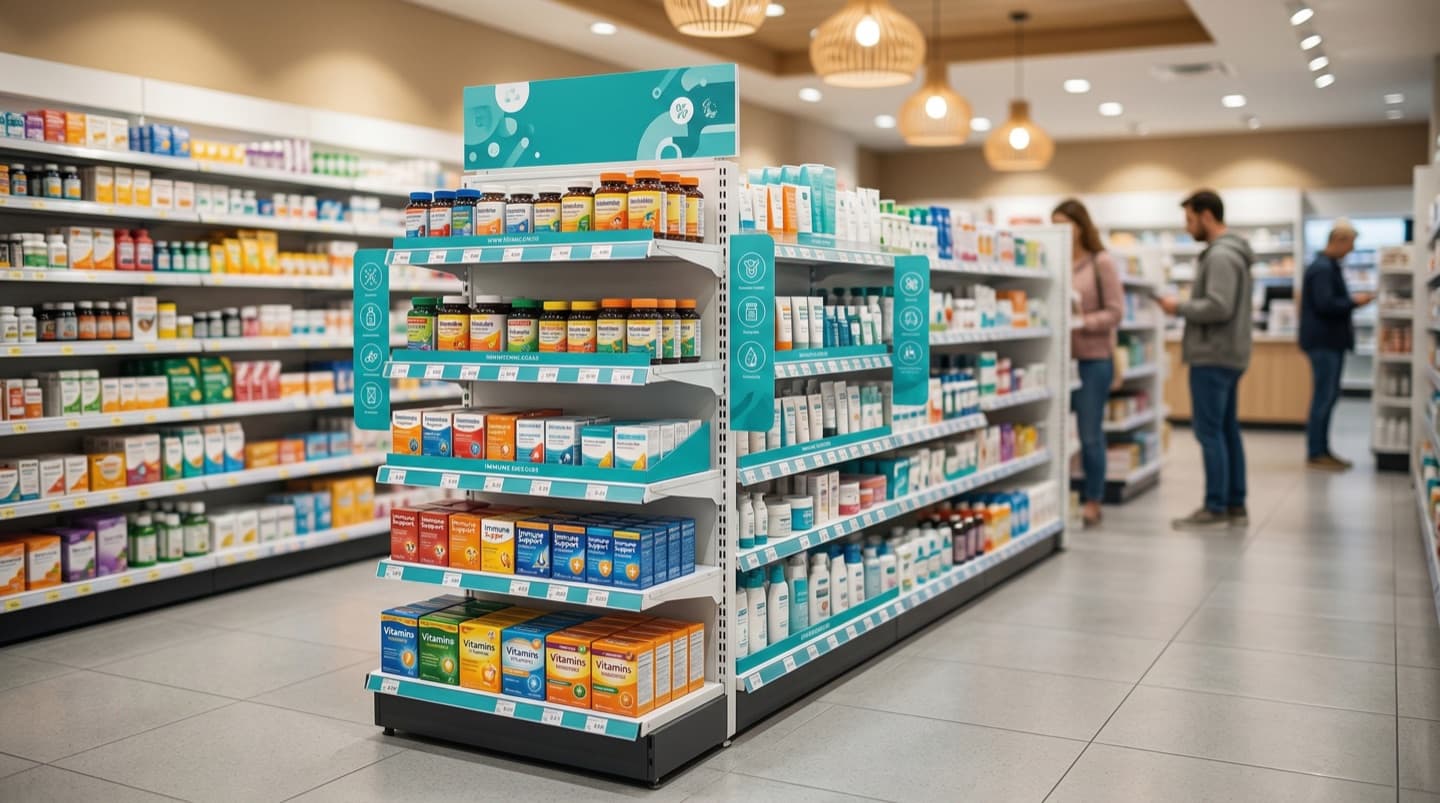
Your product listing is your digital shelf space. In a physical pharmacy, you have a sales representative ensuring your product is properly displayed with the right shelf talker and pricing label. Online, your listing does all of that work — and it does it 24 hours a day, seven days a week, in a fraction of a second. If your listing is mediocre, you are invisible.
A+ Content and Enhanced Brand Content
On Amazon.sa, A+ Content (formerly Enhanced Brand Content) lets you replace the standard product description with rich media — comparison charts, lifestyle images, brand storytelling modules, and detailed ingredient breakdowns. For consumer healthcare products, A+ Content is not optional. It is the difference between a listing that converts at 5% and one that converts at 12%.
Effective A+ Content for health products should include:
- Clinical credibility signals: Dermatologically tested badges, clinical study results (where SFDA-compliant), and ingredient origin information
- Before/after or usage demonstrations: Show the product in use. For skincare, show application steps. For supplements, show the daily routine integration.
- Comparison modules: Help consumers choose between your own product variants. If you have a range of sunscreens, a comparison table showing SPF levels, skin types, and textures eliminates confusion and reduces bounce.
- Arabic content:Over 60% of health product searches on Amazon.sa are conducted in Arabic. Your A+ Content must be fully bilingual — not machine-translated, but professionally written in Arabic.
Keyword Strategy for Healthcare Products
Keyword strategy for health products in KSA is fundamentally different from Western markets. You are optimizing for bilingual search behavior, health-specific terminology, and regulatory constraints on what claims you can make in your listing.
Here is my framework:
- Primary keywords:The direct product descriptor plus the key benefit. Example: “sunscreen SPF 50 for sensitive skin” in both English and Arabic.
- Secondary keywords:Condition-based searches. Example: “best cream for dry skin winter Saudi Arabia.” Be careful with medical claims — SFDA restrictions apply to what you can say in a marketplace listing.
- Long-tail keywords:Specific use cases. Example: “vitamin D supplement for women Riyadh” or “children’s toothpaste fluoride-free natural.”
- Backend/hidden keywords: On Amazon.sa, you have backend keyword fields that are not visible to consumers but influence search ranking. Use these for common misspellings, alternative brand names, and competitor category terms.
Product Photography
Photography standards for health products online are higher than most pharma brand teams realize. The main image must be a clean product shot on a white background — this is non-negotiable on Amazon.sa. But your secondary images are where conversion happens:
- Image 2: Product in hand or in use (shows scale and context)
- Image 3: Key ingredients or formulation callouts
- Image 4: Lifestyle image showing the target consumer
- Image 5: Packaging details (Arabic labeling compliance)
- Image 6: Bundle or range shot if applicable
- Image 7: Trust signals (certifications, awards, clinical references)
Invest in professional product photography. The cost of a proper shoot — SAR 5,000 to SAR 15,000 per SKU depending on complexity — pays for itself many times over in improved conversion rates.
Review Generation and Management
Reviews are the single most influential factor in purchase decisions for health products online. A product with 4.3 stars and 200 reviews will outsell a clinically superior product with 4.8 stars and 12 reviews every time. Volume matters as much as rating.
Legitimate review generation strategies for CHC brands include:
- Post-purchase email sequences:Amazon’s “Request a Review” feature should be used systematically. For D2C, build automated follow-up emails requesting reviews 7–14 days after delivery.
- Product inserts:Include a card in your packaging encouraging honest reviews. Do not incentivize positive reviews — this violates platform policies and SFDA advertising regulations.
- Seeding programs: Send products to verified purchasers through Amazon Vine or equivalent programs on other platforms. These generate early reviews that establish social proof for new listings.
- Responding to negative reviews: Every negative review is a content opportunity. A professional, empathetic response that addresses the concern demonstrates brand quality to every future shopper who reads that review.
Digital Shelf Management
If product listing optimization is about building the best possible individual listing, digital shelf management is about winning the broader battle for visibility across the platform. It is the e-commerce equivalent of trade marketing — ensuring your brand dominates the category at every consumer touchpoint.
Search Ranking Optimization
On Amazon.sa and Noon, organic search ranking is driven by a combination of relevance (keywords), performance (sales velocity, conversion rate), and operational health (stock levels, delivery speed, seller rating). Improving your search rank is not a one-time optimization — it is an ongoing discipline.
The key levers for improving search ranking:
- Sales velocity:The most important ranking factor. Products that sell consistently rank higher. This creates a virtuous cycle — higher rank leads to more visibility, which leads to more sales, which improves rank further.
- Conversion rate:Platforms reward listings that convert well because it means they are matching consumer intent effectively. This is why listing optimization matters so much — it directly impacts your search ranking.
- Stock availability: Out-of-stock kills your ranking. Platforms penalize products that cannot fulfill orders, and recovering lost rank after a stockout can take weeks.
- Price competitiveness: You do not need to be the cheapest, but your pricing needs to be within a reasonable range for the category. Significant premiums require significant justification (reviews, brand equity, A+ content).
Buy Box Strategy
On Amazon.sa, the Buy Box is the default purchase option that appears on a product page. If multiple sellers offer the same product, only one wins the Buy Box at any given time. For brand owners, the strategy is straightforward: control your distribution to minimize unauthorized sellers, maintain competitive pricing, and use FBA to ensure fulfillment performance meets Amazon’s requirements.
If you are losing the Buy Box on your own products, it usually means one of three things: (1) an unauthorized seller is undercutting your price, (2) your fulfillment metrics are below standard, or (3) you have pricing inconsistencies across channels that Amazon’s algorithm is detecting.
Competitor Monitoring
Digital shelf management is incomplete without systematic competitive intelligence. You need to track:
- Competitor pricing changes: Weekly at minimum, daily for key SKUs during promotional periods
- New product launches: Competitors entering your category space
- Share of search: What percentage of search results for your category keywords feature your products versus competitors
- Review velocity: How fast competitors are accumulating reviews compared to your products
- Content quality changes: Competitors upgrading their A+ Content, photography, or listing copy
There are dedicated tools for this — Helium 10, Jungle Scout, and DataWeave all offer Saudi Arabia coverage. But even a disciplined manual audit done weekly provides actionable intelligence. Track it in a structured system like Notion so the data accumulates into a competitive intelligence database over time.
E-Retailer Marketing Activations
Listing your products online is the baseline. Winning online requires proactive marketing investment on the platforms where your consumers are shopping. The most effective e-commerce brands treat platform marketing with the same rigor they apply to traditional trade promotions.
Sponsored Products and Platform Advertising
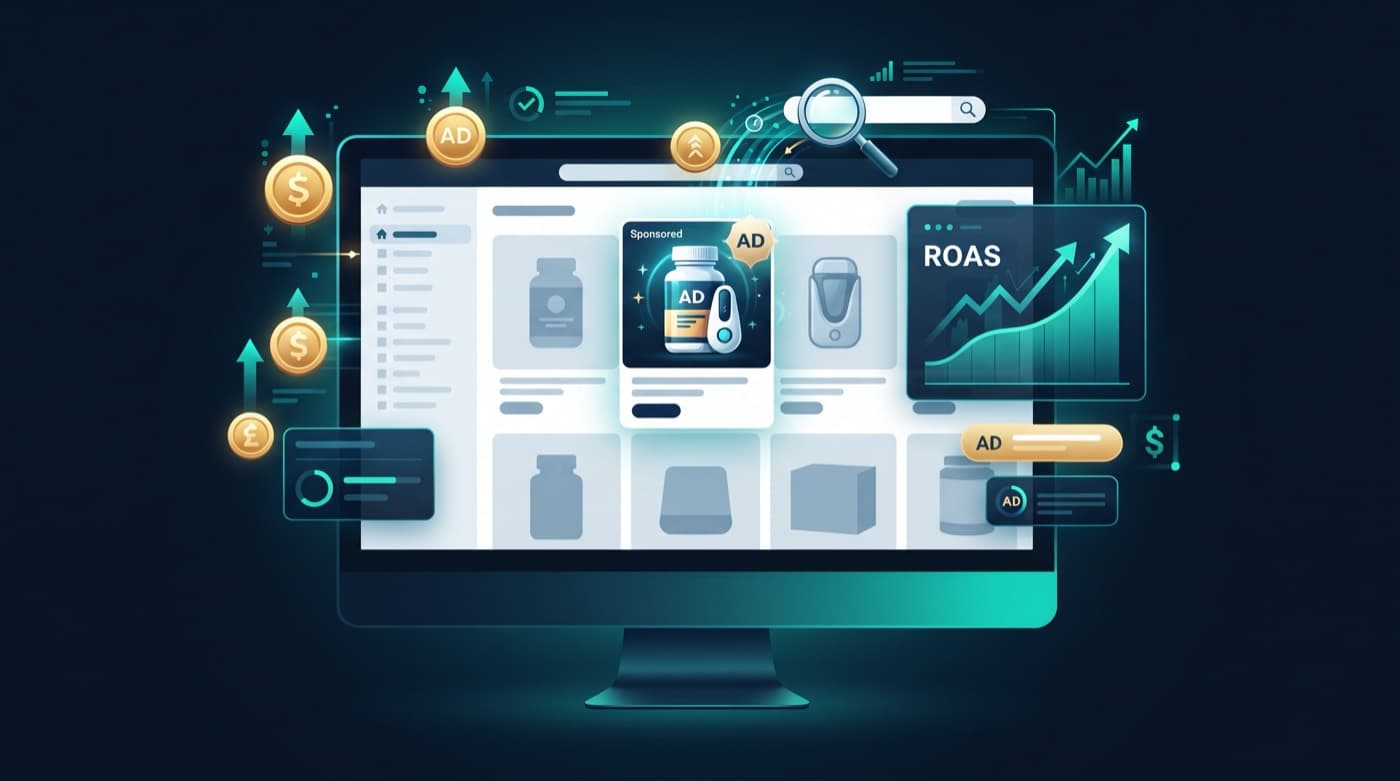
Amazon Ads is the most sophisticated advertising platform in KSA e-commerce. Sponsored Products, Sponsored Brands, and Sponsored Display campaigns let you target consumers by keyword, product category, or competitor ASIN. For consumer healthcare products, Sponsored Products campaigns are the workhorses — they appear in search results and on product detail pages, capturing high-intent traffic.
Key principles for healthcare product advertising on Amazon.sa:
- Start with automatic campaignsto discover which search terms consumers use to find products in your category. Run these for 2–4 weeks to collect data.
- Build manual campaigns around your highest-converting keywords from the automatic campaign data. This is where you optimize for ACOS (Advertising Cost of Sale).
- Defensive targeting:Bid on your own brand name and product names. Competitors will bid on your brand terms — you need to protect your own territory.
- Offensive targeting: Bid on competitor brand names and category terms where you have a compelling value proposition. This is especially effective when your product has superior reviews or pricing.
On Noon, advertising options are evolving. Noon Ads now offers sponsored placements and banner advertising within the health and beauty category. The targeting is less granular than Amazon, but the cost per click is also lower, making it a cost-effective supplementary channel.
Flash Sales and Promotional Events
Platform-wide promotional events — Amazon’s White Friday, Noon’s Yellow Friday, Ramadan campaigns, back-to-school health promotions — are volume multipliers. During White Friday 2025, health and beauty was one of the top three categories on Amazon.sa, with some CHC brands seeing 5–8x their normal daily sales volume.
To maximize promotional events:
- Plan your promotional calendar at least three months in advance
- Pre-build inventory to prevent stockouts during peak demand
- Submit deals and promotions well before platform deadlines (typically 4–6 weeks ahead)
- Increase advertising spend during events to capture the surge in search traffic
- Prepare post-event analysis templates to measure true incremental impact versus pull-forward
Bundling Strategies
Product bundling is particularly effective for consumer healthcare e-commerce because health products naturally cluster into routines. A sunscreen brand can bundle SPF 50 face cream with SPF 30 body lotion. A supplement brand can create a “daily wellness pack” combining vitamin D, omega-3, and a multivitamin. An oral care brand can bundle a toothpaste with a mouthwash.
Bundles achieve three objectives simultaneously: they increase average order value (AOV), they create unique ASINs that face less direct competition, and they help consumers discover adjacent products in your range.
Sampling Programs
Digital sampling is one of the most underutilized tactics in KSA healthcare e-commerce. Amazon’s product sampling program allows brands to send samples to targeted customer segments based on their purchase history and browsing behavior. For a dermocosmetic brand launching a new moisturizer, you can target consumers who have recently purchased competing moisturizers or related skincare products.
The cost per sample is higher than traditional pharmacy sampling, but the targeting precision and the data you collect (trial-to-purchase conversion, customer feedback) make it a valuable investment — particularly for new product launches.
Last-Mile Challenges for Healthcare Products
Consumer healthcare products create unique logistics challenges that general merchandise does not. Solving these challenges is not glamorous, but failing to solve them will destroy your e-commerce operation faster than any marketing mistake.
Cold Chain Requirements
Many health products — probiotics, certain dermocosmetic formulations, temperature-sensitive supplements — require cold chain logistics. In a country where summer temperatures regularly exceed 45 degrees Celsius, this is not a minor concern. A probiotic supplement that sits in an unrefrigerated delivery van for three hours in Riyadh in July is a spoiled product and a potential customer complaint.
Solutions include using FBA with temperature-controlled storage where available, working with specialized healthcare logistics providers, and clearly marking products with storage requirements. Some brands have found success with insulated packaging that maintains temperature for 24–48 hours during transit.
Prescription Adjacency
Many consumer healthcare products sit at the boundary between OTC and prescription categories. SFDA regulations govern what can be sold online without a prescription, and these regulations are actively evolving. Brands need to maintain close communication with SFDA to ensure their product classifications and online sales permissions are current. A product that was freely sold online last quarter may require updated documentation or classification this quarter.
Returns and Reverse Logistics
Returns in healthcare e-commerce are uniquely problematic. Unlike electronics or apparel, returned health products often cannot be resold — once a skincare product has been opened, it is destroyed. This means your return rate directly impacts your product-level profitability in a way that is more severe than most consumer goods categories.
Strategies to manage return impact:
- Invest in listing accuracy.The number one reason for health product returns is “not as described” — wrong shade, unexpected texture, wrong size. Better product information reduces this significantly.
- Tamper-evident packaging. This protects you from fraudulent returns and allows you to identify products that have been opened.
- Size and shade guidance tools. Interactive guides that help consumers choose the right variant before purchase reduce post-purchase regret.
- Generous exchange policies, strict refund policies. Encourage consumers to exchange for the correct product rather than requesting a refund.
E-Commerce Analytics and KPIs
You cannot manage what you do not measure. E-commerce gives you access to granular performance data that traditional retail simply does not provide. The challenge is not data availability — it is knowing which metrics actually drive decisions and which are vanity metrics.
The KPIs That Matter for Healthcare E-Commerce
| KPI | What It Measures | Target Benchmark (CHC) |
|---|---|---|
| Conversion Rate | Sessions that result in a purchase | 8–15% (health category average) |
| Gross Merchandise Value (GMV) | Total revenue from online sales | Varies; track month-over-month growth |
| Average Order Value (AOV) | Revenue per transaction | SAR 80–180 for CHC |
| Share of Search | Brand visibility in category search results | Top 3 results for core keywords |
| Best Seller Rank (BSR) | Relative sales performance within category | Top 50 in your sub-category |
| ACOS (Advertising Cost of Sale) | Ad spend as a percentage of ad-driven revenue | 15–25% for healthcare products |
| Return Rate | Percentage of orders returned | Below 5% for CHC products |
| Buy Box Win Rate | Percentage of time you hold the Buy Box | Above 90% for brand owners |
Building Your Analytics Dashboard
Do not try to track everything. Build a weekly reporting cadence around the eight KPIs above, supplemented by monthly deep dives into specific areas like keyword performance, competitive pricing trends, and customer review sentiment.
The most effective e-commerce teams I have worked with maintain a simple weekly dashboard that shows each KPI against target, with trend lines showing the last 12 weeks. This makes it immediately obvious when something needs attention. Red/yellow/green color-coding keeps leadership briefings efficient and focused.
For D2C operations, layer in website analytics — traffic sources, funnel conversion rates, email open and click-through rates, and customer lifetime value. If you are building landing pages and email funnels for your D2C channel, platforms like Systeme.io provide built-in analytics for funnel performance, email engagement, and conversion tracking — which simplifies reporting significantly compared to stitching together data from multiple tools.
Building an E-Commerce Team for Pharma and CHC
The biggest mistake I see pharma companies make with e-commerce is treating it as an add-on responsibility. They assign it to whoever is currently least busy — the junior brand manager, the digital marketing coordinator, or the trade marketing analyst. This guarantees mediocre results.
E-commerce for consumer healthcare requires dedicated capability across three functional areas:
Commercial and Strategy
You need someone who understands marketplace economics, can negotiate platform terms, manages pricing strategy across channels, and owns the P&L for the e-commerce business. This is typically an e-commerce manager or head of digital commerce, reporting to the commercial director.
Content and Marketing
Product listing creation, A+ content development, photography coordination, advertising campaign management, and review strategy all require dedicated bandwidth. This is not work you can add to an existing brand manager’s plate without something else suffering.
Operations and Analytics
Inventory planning for e-commerce, fulfillment coordination (especially FBA inbound shipments), return processing, and performance analytics need operational capability. This person works closely with your supply chain team and the platform’s operations teams.
The Minimum Viable E-Commerce Team
For a brand with SAR 5–20 million in annual online revenue, the minimum viable team is three people: one commercial lead, one content/marketing specialist, and one operations/analytics coordinator. Below this, you are spreading people too thin and you will see it in your KPIs.
For companies that are not ready to build an in-house team, working with a specialized e-commerce agency is a viable alternative — but choose one with proven healthcare category experience. General e-commerce agencies often underestimate the regulatory and content complexity of health products.
If you are building an e-commerce team and want to connect with other pharma leaders who have navigated this same challenge, the PharmaGrowth community is where commercial directors and e-commerce managers across KSA share org structures, hiring frameworks, and vendor recommendations.
Common E-Commerce Mistakes in Healthcare
Before closing, let me highlight the mistakes I see most frequently. Every one of these has cost a brand I have worked with real money and real market share:
- Treating e-commerce as a side project. Assigning it to someone with 15 other responsibilities ensures it gets 15% of the attention it needs.
- Ignoring Arabic content. If your product listings are English-only, you are invisible to the majority of KSA online shoppers. Full bilingual optimization is mandatory.
- Inconsistent pricing across channels. Consumers and algorithms notice. If your product is SAR 89 on your D2C site, SAR 79 on Amazon, and SAR 95 at Nahdi Online, you have channel conflict that erodes trust and margin.
- Neglecting post-purchase experience. The sale is not the end of the funnel. Follow-up emails, review requests, and repeat purchase incentives drive customer lifetime value.
- Stockouts during promotional events. Running out of stock during White Friday or a Ramadan campaign wastes your marketing investment and damages your search ranking for weeks afterward.
- Copying offline strategy online. The promotional mechanics, pricing psychology, and consumer decision journey are fundamentally different online. What works in a pharmacy aisle does not automatically translate to a product detail page.
For tailored guidance on building your e-commerce strategy, the PharmaGrowth coaching programs offer one-on-one sessions with experienced pharma e-commerce practitioners who can review your specific situation and provide actionable recommendations.
Frequently Asked Questions
How much should a consumer healthcare brand invest in e-commerce in KSA?
As a general benchmark, allocate 8–15% of your total e-commerce revenue target to platform advertising, plus an additional 3–5% for content creation, photography, and listing optimization. For a brand targeting SAR 10 million in annual online sales, that translates to SAR 800K–1.5M in ad spend and SAR 300K–500K in content investment annually. The exact allocation depends on your category competitiveness, brand awareness level, and growth targets. Start conservative, measure rigorously, and scale what works.
Should we use FBA or manage our own fulfillment for health products?
For most consumer healthcare brands entering e-commerce in KSA, FBA (Fulfillment by Amazon) is the right starting point. It provides Prime eligibility (which significantly impacts conversion rates), handles storage and shipping, and meets the delivery speed expectations that Saudi consumers now have. The main caveat is products requiring cold chain logistics — FBA’s temperature-controlled capabilities in KSA are still evolving. For temperature-sensitive products, work with a specialized healthcare logistics provider alongside FBA for your ambient-stable products.
How do SFDA regulations affect e-commerce for consumer healthcare products?
SFDA’s e-pharmacy regulations govern what health products can be sold online, what claims can be made in digital product listings, and what licensing requirements apply to online sellers of health products. For OTC consumer healthcare products (skincare, oral care, supplements, pain relief), online sales are generally permitted through licensed platforms. However, product claims must comply with SFDA advertising guidelines — which are stricter online than many brands realize. Every product listing should be reviewed by your regulatory affairs team before publication, just as you would review pharmacy point-of-sale materials.
How long does it take to build a profitable e-commerce channel for CHC products?
Based on my experience, expect 6–12 months to reach profitability on a per-order basis on Amazon.sa or Noon, assuming you invest properly in listings, advertising, and operations from day one. The first 3–4 months are typically investment-heavy as you build reviews, optimize keywords, and establish search ranking. By months 6–8, organic traffic starts supplementing paid traffic, and your ACOS should be decreasing as your listings mature. Full P&L profitability including team costs and content investment usually arrives around months 12–18.
Can we sell the same consumer healthcare products on multiple platforms simultaneously?
Yes, and you should. Multi-platform distribution is essential for maximizing reach and reducing platform dependency risk. The key is managing it correctly: maintain price consistency (or have clear, defensible reasons for differences), avoid promotional calendar conflicts, and assign distinct roles to each platform in your channel strategy. Amazon.sa for volume and discoverability, Nahdi Online for premium positioning, Noon for promotional events. The brands that fail at multi-channel are the ones that simply copy the same listing, pricing, and promotions across all platforms without a differentiated strategy.
Final Thoughts
E-commerce for consumer healthcare products in Saudi Arabia is not a future opportunity — it is a present imperative. The brands that are winning right now are the ones that treat e-commerce as a core commercial channel with dedicated resources, clear KPIs, and strategic investment — not an experiment managed by whoever has spare bandwidth.
The playbook is clear: understand the platform landscape, build listings that convert, manage your digital shelf aggressively, invest in platform marketing, solve the logistics challenges, and measure everything. None of this is theoretical — every framework in this article comes from years of building real e-commerce operations for real health brands in this market.
If you are ready to build or scale your e-commerce operation for consumer healthcare in KSA, I invite you to join the PharmaGrowth community. It is where pharma marketing and commercial professionals across the MENA region share e-commerce strategies, platform insights, and real-world results. The conversations happening inside the community right now are exactly the kind of practical, no-nonsense knowledge exchange that accelerates results.
Sherif Al-Kady is a pharmaceutical marketing strategist with 20+ years of experience building consumer healthcare and dermocosmetic brands across the GCC and MENA region. He is the founder of PharmaGrowth, a platform dedicated to helping pharma marketers grow their brands and careers through commercial excellence and digital transformation.