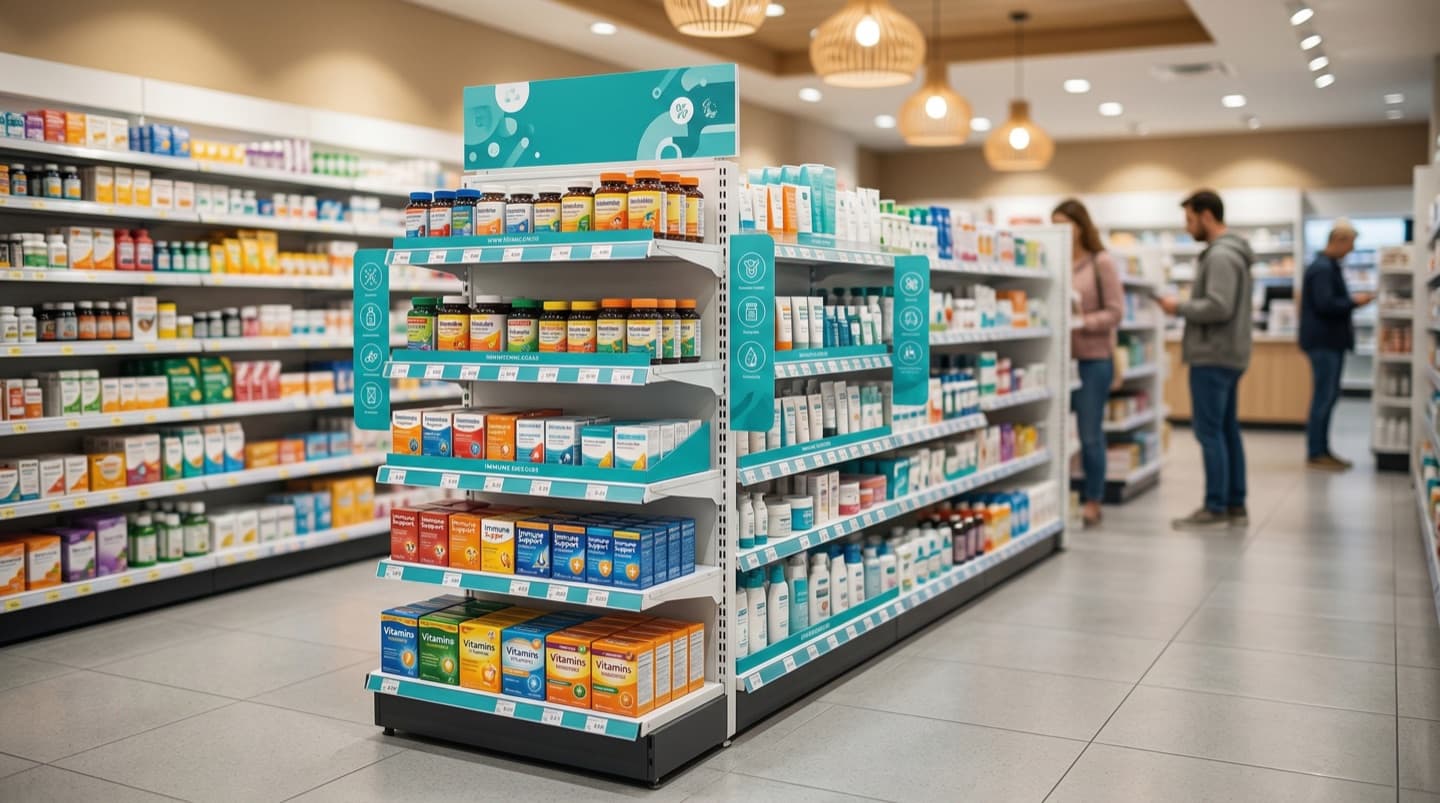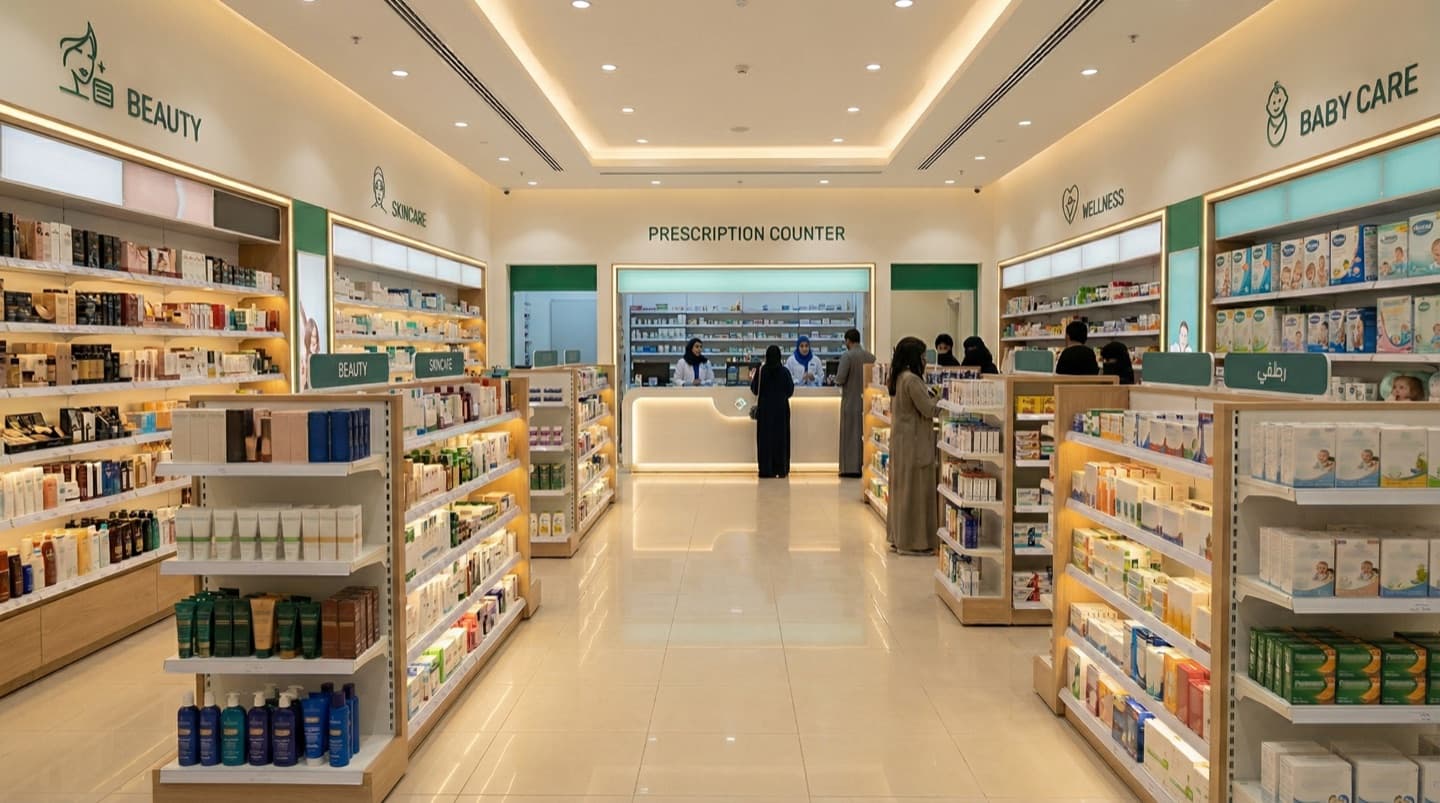
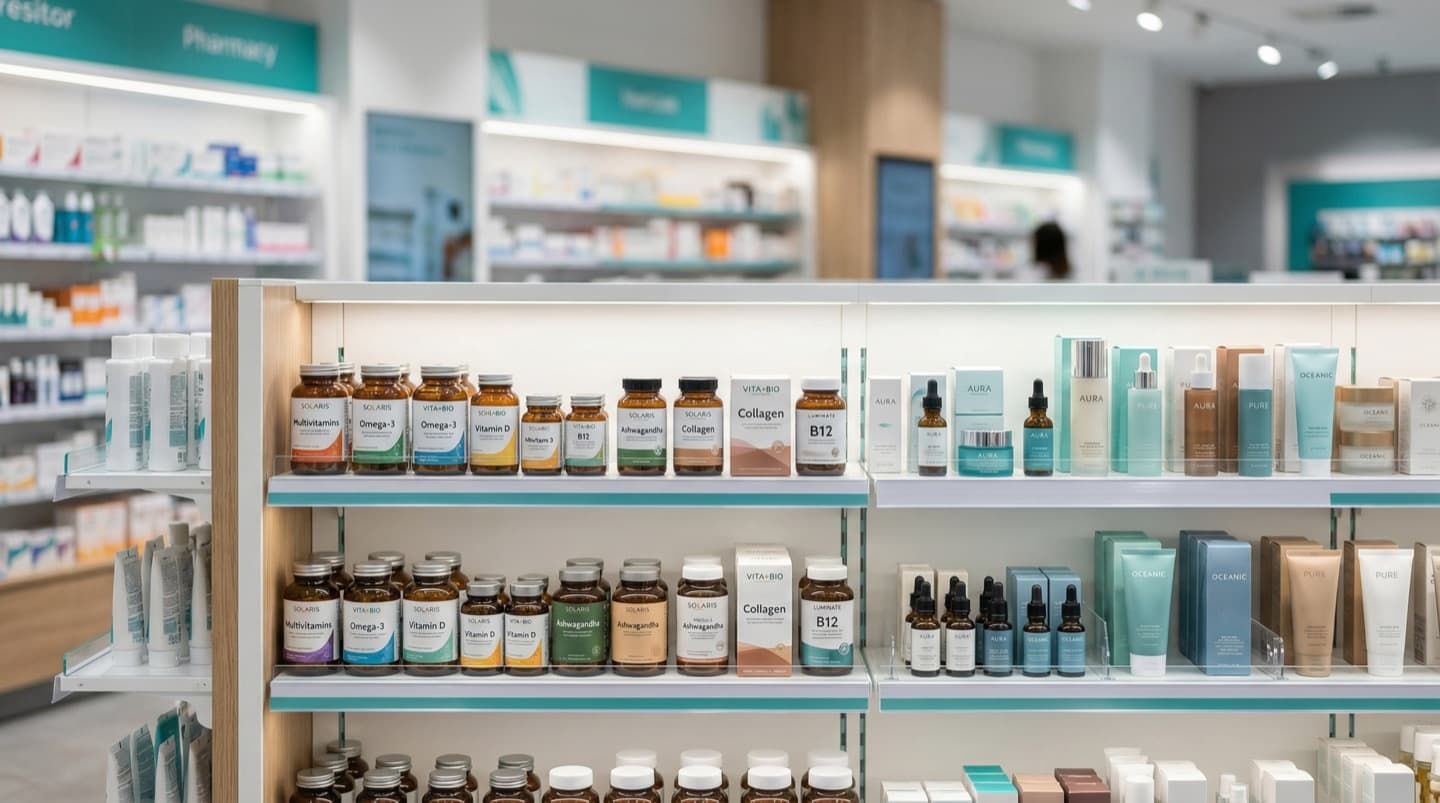
Here is a number that should keep every consumer healthcare brand manager up at night: roughly 70% of purchase decisions in a pharmacy are made or changed at the shelf. Not during the TV commercial. Not when the patient Googled the brand at home. At the shelf — in those final three seconds when a hand reaches out and picks one product over another.
I have spent more than 20 years building consumer healthcare brands across Saudi Arabia, the UAE, Egypt, and the broader MENA region. I have launched OTC products, scaled dermocosmetic portfolios, and managed oral care brands through every kind of pharmacy channel imaginable — from independent pharmacies in Cairo to Nahdi flagships in Riyadh. And if there is one lesson I keep coming back to, it is this: the brands that win at the shelf are not always the ones with the biggest advertising budgets. They are the ones that treat merchandising as a strategic discipline, not a logistical afterthought.
This article is the guide I wish someone had handed me 15 years ago. It covers the science behind shelf placement, the art of in-store visibility, the mechanics of planogram negotiation, and the emerging world of digital shelf optimization — all through the lens of consumer healthcare in the KSA and GCC pharmacy context.
70%
Of pharmacy purchases decided or changed at the shelf
30–40%
More sales at eye-level vs. floor-level placement
3×
Faster sell-out for brands with consistent POSM vs. none
15%
Average revenue lift from a compliant planogram rollout
Table of Contents
- Why Merchandising Matters More in Pharma Than You Think
- The Science of Pharmacy Shelf Placement
- Planogram Strategy for Consumer Healthcare
- In-Store Visibility Tools That Actually Work
- Merchandising in KSA Pharmacy Chains
- Digital Merchandising and the E-Pharmacy Shelf
- Merchandising Audits and Compliance
- Category Management and the Retailer Relationship
- Frequently Asked Questions
Why Merchandising Matters More in Pharma Than You Think
Most pharmaceutical companies invest heavily in three areas: medical detailing to physicians, digital advertising to consumers, and trade promotions to pharmacies. Merchandising — the discipline of optimizing how products appear, perform, and sell within the retail environment — gets treated as a line item inside the trade marketing budget. A shelf talker here, a counter display there, maybe a gondola header if the budget allows.
That is a strategic mistake, and I have watched it cost brands millions in lost sell-out over the years.
Consumer healthcare sits in a unique position within the pharmaceutical industry. Unlike prescription drugs, where the physician’s script largely determines what gets dispensed, consumer healthcare products — OTC medications, dermocosmetics, oral care, vitamins, and supplements — compete for attention at the point of purchase. The shopper walks into Nahdi looking for a sunscreen and faces 15 options. The patient asks the pharmacist for something for a sore throat and the pharmacist scans the shelf behind the counter. In both cases, merchandising determines which brand gets picked.
Here is why merchandising deserves more strategic attention than most pharma companies give it:
- The pharmacist recommendation is influenced by visibility. Pharmacists in KSA are incredibly busy. When a patient asks for a recommendation, the pharmacist’s eyes scan the shelf behind them. The product that is at eye level, well-stocked, and clearly labeled gets recommended more often. I have seen this pattern hundreds of times during store visits.
- Category-directed shoppers choose based on shelf position. A shopper who enters the pharmacy knowing they need a moisturizer but without a brand in mind will pick from what they can see most easily. Eye-level placement and clear brand blocking are the single biggest drivers of conversion for these shoppers.
- Impulse purchases are a massive revenue lever. Lip care, hand sanitizers, travel-size products, vitamins — these categories thrive on impulse. Counter displays and checkout adjacency drive this behavior, and it requires deliberate merchandising investment.
- Advertising without merchandising is wasted money. I have seen brands spend millions on digital campaigns driving consumers to pharmacies, only for those consumers to find the product out of stock, buried on a bottom shelf, or hidden behind a competitor’s display. Every riyal spent on advertising is amplified or wasted by what happens at the shelf.
The Science of Pharmacy Shelf Placement
Shelf placement is not guesswork. There is a well-documented body of retail science behind where products should sit, and the principles apply with particular force in pharmacy retail. Let me break down the key concepts every consumer healthcare marketer needs to internalize.
Eye Level Is Buy Level
This is the oldest rule in retail merchandising, and it remains the most important. Products placed at eye level — typically between 120 and 160 centimeters from the floor — consistently outsell products placed above or below that zone by a factor of two to three times. In pharmacy retail, this effect is even more pronounced because shoppers are often browsing categories rather than searching for a specific brand.
Eye level is relative, and this matters in the KSA market. The average adult height in Saudi Arabia differs between men and women, and the shopper demographic varies by category. A children’s vitamin brand needs to consider the parent’s eye level, not the child’s. A dermocosmetic brand targeting women aged 25 to 40 should optimize for a slightly different sightline than an oral care brand targeting families.
The Hot Zones
Every pharmacy shelf has hot zones and dead zones. Understanding these is essential for negotiating placement within a planogram.
- Prime zone (eye level, 120–160 cm):Highest conversion. Reserve this for your hero SKUs — the products that drive the most revenue and have the highest margin for the retailer. This is non-negotiable.
- Touch zone (waist level, 80–120 cm): Second best position. Shoppers can see and reach these products easily. Good for your second-tier SKUs or complementary products.
- Stretch zone (above eye level, 160–200 cm): Lower conversion. Products here are visible but harder to reach. Use this for larger pack sizes or products with strong brand recognition that shoppers will actively search for.
- Stoop zone (below 80 cm): The worst position on the shelf. Products here are virtually invisible to standing shoppers. Unfortunately, this is where many brands end up when they do not negotiate effectively. I always tell my teams: if your hero SKU is in the stoop zone, you have a merchandising emergency.
Category Adjacency
Where your category sits relative to other categories matters enormously. Smart adjacency drives cross-selling and increases basket size. In pharmacy retail, effective adjacencies include:
- Sunscreen placed adjacent to after-sun care and moisturizers
- Oral care (toothpaste, mouthwash, whitening) placed as a consolidated block rather than scattered across aisles
- Baby skincare adjacent to baby health and nutrition products
- Pain relief adjacent to cold and flu products during winter seasons
- Dermocosmetic cleansers adjacent to treatment products (acne, anti-aging, pigmentation)
In KSA pharmacy chains, category adjacency is typically controlled by the chain’s category management team. As a brand, your ability to influence this depends on the strength of your category story and your willingness to share data that supports the adjacency you are proposing.
Facing and Share of Shelf
A facing is a single front-facing unit of your product on the shelf. The more facings you have, the more visible your brand is, and the more likely a shopper is to pick it up. Research consistently shows that there is a nearly linear relationship between share of shelf (the percentage of facings in a category that belong to your brand) and share of sales — up to a point of diminishing returns.
The practical implication is clear: you should be tracking your share of shelf in key accounts as rigorously as you track your market share. If your share of shelf is significantly below your share of market, you are leaving sell-out on the table. If it is significantly above, you may be over-investing in shelf space relative to consumer pull.
Planogram Strategy for Consumer Healthcare
A planogram is the visual schematic that dictates exactly where every product sits on a pharmacy shelf. In major KSA pharmacy chains like Nahdi and Al-Dawaa, planograms are centrally managed and tightly controlled. The category management team at the chain decides the planogram, and individual store managers have limited authority to deviate from it.
This means that planogram negotiation is one of the highest-stakes activities in consumer healthcare merchandising. Getting your product into a favorable planogram position — and keeping it there — directly drives sell-out. Here is how I approach it.
Building the Category Story
The single most effective way to influence a planogram is to present a compelling category story backed by data. Pharmacy chain buyers and category managers are not persuaded by brand-level arguments like “our product is innovative” or “we have strong brand awareness.” They care about category growth, basket size, and margin per linear centimeter of shelf space.
A strong category story answers three questions:
- How is this category growing, and what is driving that growth? Use IQVIA, Nielsen, or your own sell-out data to show the category trend and the segments within it that are accelerating.
- How should the shelf reflect the way consumers shop this category? If consumers shop by skin type rather than by brand, the shelf should be organized by skin type. If they shop by benefit (whitening, sensitivity, cavity protection in oral care), the shelf should reflect those benefit segments.
- What is the optimal assortment and placement to maximize category revenue per shelf meter?This is where you bring hard numbers — showing the retailer that your proposed planogram drives more revenue per linear meter than the current one.
OTC and Self-Care Products
For OTC medications — pain relief, cold and flu, digestive health, allergy — the planogram strategy differs from beauty and personal care. OTC shoppers are often in a distress purchase mindset. They need the product now, and they need to find it quickly.
The optimal OTC planogram organizes by condition or need state, not by brand. A shopper looking for a headache remedy should find all headache options in one clear section, with the most common dosage forms at eye level. Within that section, your brand’s goal is to have the most facings, the strongest shelf presence, and the most visible packaging.
Dermocosmetics
Dermocosmetics is one of the fastest-growing segments in GCC pharmacy retail, and the planogram strategy here is fundamentally different from OTC. Dermocosmetic shoppers are typically browsing, comparing, and evaluating. They spend more time at the shelf. They read packaging. They compare ingredients.
The optimal dermocosmetic planogram creates a branded destination within the pharmacy. This is why you see brands like La Roche-Posay, Bioderma, Avene, and CeraVe investing heavily in branded bays and gondola sections within Nahdi and Al-Dawaa. The goal is to create a mini-boutique experience within the pharmacy — a branded space where the entire range is visible, organized by routine (cleanse, treat, moisturize, protect), and supported by educational materials.
Oral Care
Oral care merchandising has its own dynamics. The category is typically organized into toothpaste, toothbrushes, mouthwash, and specialty products (whitening strips, interdental brushes, sensitive care). The challenge in oral care is that it is a high-frequency, low-engagement purchase — shoppers tend to grab what they know quickly.
The winning planogram strategy for oral care focuses on brand blocking — grouping all your brand’s variants together so they create a visual block on the shelf that catches the eye. In my experience, a well-executed brand block for an oral care brand can increase sell-out by 15 to 25 percent versus a scattered placement where your variants are interspersed with competitors.
Shelf Science
Sales Impact by Pharmacy Shelf Position
Sales index relative to eye-level baseline (100) — based on KSA pharmacy audit data across OTC categories
In-Store Visibility Tools That Actually Work
Point-of-sale materials — POSM — are the workhorses of pharmacy merchandising. But not all POSM is created equal. I have seen millions of riyals wasted on materials that pharmacies refuse to display, that shoppers ignore, or that fall apart within a week. Here is what actually works in the KSA pharmacy environment.
Gondola Headers and End Caps
Gondola headers sit at the top of the shelf unit and are visible from across the pharmacy. End caps — the displays at the end of an aisle — are among the highest-traffic, highest-conversion positions in any retail environment. In pharmacy, end caps are typically reserved for promotional displays, new product launches, or seasonal campaigns.
Securing an end-cap position in a major KSA pharmacy chain like Nahdi requires advance planning, trade investment, and a compelling promotional mechanic. The ROI is significant — I have seen end-cap displays drive 3 to 5 times the sell-out rate of standard shelf placement during the campaign period. But the investment is also significant, so you need to be strategic about which SKUs and which campaigns get end-cap treatment.
Shelf Strips and Shelf Talkers
Shelf strips run along the edge of the shelf and carry your branding and key messages. Shelf talkers are the perpendicular tags that stick out from the shelf edge and catch the shopper’s eye as they walk down the aisle.
The three-second rule applies here: if the message on your shelf talker cannot be understood in three seconds, it will not work. I have reviewed hundreds of shelf talker designs over the years, and the most common mistake is trying to communicate too much. The best shelf talkers communicate a single message — a price point, a key benefit, a promotional offer — in large, readable text with strong visual contrast.
In KSA, all POSM must be bilingual, with Arabic as the primary language. This is not optional — it is a regulatory and commercial requirement. Arabic-first design is essential.
Wobblers
Wobblers are the small, flexible tags that are attached to the shelf edge and wobble gently with air movement, catching the shopper’s peripheral vision. They are inexpensive, easy to deploy, and surprisingly effective for drawing attention to a specific SKU or promotion.
I recommend wobblers for two specific use cases: new product launches (drawing attention to a product the shopper has not seen before) and promotional pricing (highlighting a limited-time offer). Keep the design simple — product image, one benefit line, and the price or promotion mechanic.
Counter Displays
Counter displays sit on the pharmacy counter, right next to the cash register. This is prime real estate for impulse purchases — lip care, hand sanitizers, travel-size products, and seasonal items. In KSA pharmacies, the counter area is also where the pharmacist dispenses prescription products, so it has built-in foot traffic.
The challenge with counter displays is space. Pharmacy counters are small, and chains are very selective about what they allow. To secure counter placement, you need a product with high turnover, strong margin for the retailer, and a compact, well-designed display unit that the pharmacy staff will actually maintain.
Floor-Standing Displays and Dump Bins
For major promotional campaigns or new product launches, floor-standing displays and dump bins create a physical presence that cannot be ignored. These are especially effective during Ramadan promotions, back-to-school campaigns, and summer sun-care pushes in the GCC.
The key to effective floor-standing displays is durability and restockability. I have seen beautiful display units that were empty within two days because the pharmacy staff did not know how to restock them, or the design made restocking difficult. Always design your floor displays with the store staff in mind — they are the ones who will maintain it.
Merchandising in KSA Pharmacy Chains
The Saudi pharmacy retail landscape is dominated by organized chains, with Nahdi and Al-Dawaa controlling the majority of pharmacy retail revenue. Understanding the specific merchandising requirements and standards of these chains is essential for any consumer healthcare brand operating in KSA.
Nahdi Merchandising Standards
Nahdi is the largest pharmacy chain in Saudi Arabia and one of the most sophisticated retail operations in the Middle East. Their merchandising standards are rigorous, and they take planogram compliance extremely seriously.
Key aspects of merchandising for Nahdi include:
- Centralized planogram management:Planograms are designed and enforced by Nahdi’s category management team. Brand teams influence planograms through the buyer and category manager, not through individual store managers.
- Branded bay opportunities: Nahdi offers branded bay spaces for dermocosmetic and premium consumer healthcare brands. These are dedicated shelf sections that carry your branding, organized by your recommended product routine. Securing a branded bay is a significant investment but delivers exceptional visibility and sell-out performance.
- POSM approval process: All POSM must be submitted for approval before deployment. Nahdi has specific guidelines on materials, dimensions, messaging, and placement. Non-compliant materials will be removed by store staff.
- Digital integration: Nahdi has been a leader in integrating physical and digital merchandising. Their Nuhdeek loyalty app features product recommendations, promotions, and digital shelf content that complements the in-store experience. Brands that invest in both physical and digital merchandising within the Nahdi ecosystem see significantly stronger sell-out results.
- Seasonal and promotional windows:Nahdi has defined promotional windows throughout the year — Ramadan, summer, back-to-school, and national holidays. Planning your merchandising calendar around these windows is essential.
Al-Dawaa Merchandising Requirements
Al-Dawaa is the second-largest pharmacy chain in KSA and has a significant presence in cities and towns across the Kingdom. Their merchandising approach differs from Nahdi in several important ways.
- Store format variation: Al-Dawaa has more variation in store formats compared to Nahdi, which means planogram execution can vary more between locations. Brand teams need to account for different fixture configurations and shelf dimensions.
- Pharmacist-driven recommendations:Al-Dawaa places significant emphasis on pharmacist training and recommendations. Merchandising strategies that support the pharmacist — such as behind-the-counter displays, pharmacist reference guides, and sampling programs — tend to perform well.
- Trade investment structure: The commercial model for securing premium merchandising space differs from Nahdi. Brand teams should work closely with their Al-Dawaa account manager to understand the investment requirements for end caps, branded sections, and promotional windows.
- Compliance monitoring: Like Nahdi, Al-Dawaa monitors planogram compliance, but the level of enforcement can vary by region. This makes field force execution and regular store visits even more important for brands operating in Al-Dawaa.
Independent Pharmacies
While organized chains dominate KSA pharmacy retail, independent pharmacies still represent a meaningful portion of the market, particularly in smaller cities and towns. Merchandising in independents is fundamentally different — there is no centralized planogram, and the pharmacy owner or manager makes all merchandising decisions.
The key to winning in independent pharmacies is the relationship between your field force and the pharmacy staff. Your medical representatives and merchandisers need to build genuine relationships, understand the pharmacy’s specific needs, and provide hands-on support with shelf organization, stock rotation, and POSM installation. In my experience, brands that invest in strong field force execution in independents can achieve disproportionate share of shelf and pharmacist recommendation rates.
Digital Merchandising and the E-Pharmacy Shelf
The pharmacy shelf is no longer just a physical thing. With the rapid growth of e-pharmacy platforms in KSA — including Nahdi Online, NahdiCare, and various marketplace platforms — digital merchandising has become an essential extension of your in-store strategy. The principles are related but the execution is entirely different.
Product Page Optimization
Your product page on an e-pharmacy platform is your digital shelf space. Every element of that page influences whether a shopper adds your product to their cart or scrolls past it. The key elements to optimize include:
- Product title:Include the brand name, product variant, key benefit, and pack size. Do not use vague or overly creative titles — shoppers on e-pharmacy platforms are searching by keyword, and your title needs to match their search intent.
- Product images: Use high-resolution images that show the product from multiple angles, include the packaging, and ideally show the product in context (a hand holding the sunscreen tube, the toothpaste on a brush). The primary image should be on a clean white background for consistency with platform standards.
- Product description:Lead with benefits, not features. The first two lines are critical because they appear before the shopper clicks “read more.” Include key ingredients, usage instructions, and the specific consumer need the product addresses.
- Reviews and ratings:Social proof is the digital equivalent of pharmacist recommendation. Actively manage your review strategy — encourage satisfied customers to leave reviews and respond professionally to negative feedback.
A+ Content and Enhanced Product Pages
On platforms that support it, A+ content — enhanced product descriptions with rich media, comparison charts, and brand storytelling — can significantly increase conversion rates. Think of A+ content as your digital branded bay. It is the space where you can tell a richer product story than a standard product listing allows.
For consumer healthcare brands, effective A+ content typically includes before-and-after scenarios, ingredient breakdowns with plain-language explanations, usage routines showing how multiple products work together, and clinical or efficacy data presented in consumer-friendly formats.
Digital Shelf Monitoring
Just as you audit physical shelf placement, you need to monitor your digital shelf performance. Key metrics to track include:
- Search ranking: Where does your product appear when a shopper searches for your category? Are you on page one?
- Share of search: What percentage of search results in your category feature your brand versus competitors?
- Content compliance: Are your product images, descriptions, and pricing accurate and up to date across all platforms?
- Stock availability:An out-of-stock product on an e-pharmacy platform does not just lose one sale — it loses search ranking momentum and pushes shoppers to competitors.
- Rating and review velocity: How quickly are new reviews coming in, and what is the trend in your average rating?
Merchandising Audits and Compliance
A merchandising strategy is only as good as its execution. And in my experience, the gap between planned merchandising and actual in-store execution is the single biggest source of lost sell-out for consumer healthcare brands. The solution is rigorous, systematic merchandising audits.
What to Audit
A comprehensive merchandising audit should cover every element that affects how your products appear and perform at the shelf:
- Shelf placement compliance: Is your product in the planogram position that was agreed with the chain? Has it been moved, reduced, or replaced by a competitor?
- Share of shelf: Count your facings versus competitors. Calculate your share of shelf and compare it to your target and your share of market.
- Stock availability: Are all SKUs in stock? Are there any out-of-stock gaps? Out-of-stock is the most expensive problem in merchandising because it directly converts to lost sales.
- POSM presence and condition: Are your shelf talkers, wobblers, and display units in place? Are they clean, intact, and current? Outdated or damaged POSM does more harm than no POSM at all.
- Price compliance: Is the displayed price correct? In KSA, pricing errors can create consumer complaints and regulatory issues.
- Competitor activity: What are your competitors doing at the shelf? Have they introduced new POSM, changed their shelf position, or launched a promotional display?
Photo Audits and Technology
The days of clipboard-based merchandising audits are numbered. Modern merchandising audit technology uses smartphone-based photo capture with image recognition to automate shelf analysis. Your field force takes a photo of the shelf, and the system automatically identifies products, counts facings, detects out-of-stocks, and measures share of shelf.
Tools like Trax, Planorama, and various regional solutions have transformed how consumer healthcare brands monitor merchandising execution. The investment in these tools pays for itself quickly through improved compliance rates, faster identification of problems, and better data for planogram negotiations.
I strongly recommend that every consumer healthcare brand operating in KSA pharmacies implements a photo audit system for their top accounts. The data it generates becomes the foundation for better trade negotiations, more effective field force management, and ultimately, stronger sell-out performance.
Field Force Execution
Your field force — whether they are your own employees or a third-party merchandising team — are the human beings who execute your merchandising strategy in every store, every day. The quality of your field force execution is the single biggest determinant of whether your carefully designed planograms, POSM, and display strategies actually translate into sell-out.
Key elements of effective field force execution include:
- Clear merchandising standards:Your field team needs a visual guide showing exactly what “good” looks like for every store format and every category.
- Regular store visit schedules: Top accounts should be visited weekly. Secondary accounts fortnightly. The visit schedule should be non-negotiable.
- Real-time reporting: Field force should report audit findings, out-of-stocks, and competitive activity in real time, not in a weekly Excel report that arrives three days late.
- Training and development: Merchandisers need to understand not just the mechanics of shelf arrangement but the commercial rationale behind it. They should be able to explain to a store manager why a particular arrangement drives more category revenue.
Category Management and the Retailer Relationship
The most effective approach to pharmacy merchandising is not transactional — it is strategic. And the framework for that strategic approach is category management. When you move from “selling your brand into a pharmacy chain” to “partnering with the chain to grow the category,” the entire dynamic shifts in your favor.
What Category Management Means in Pharmacy
Category management is the process of managing product categories as strategic business units within the retail environment. Instead of each brand fighting for its own shelf space, category management takes a holistic view: what is the optimal assortment, pricing, placement, and promotion strategy that maximizes category revenue and profitability for the retailer?
The brand that positions itself as the category captain — the trusted partner who brings data, insights, and recommendations to the retailer — gains disproportionate influence over planograms, assortment decisions, and promotional calendars. In KSA pharmacy retail, becoming the category captain for your segment is one of the most valuable strategic positions a consumer healthcare brand can achieve.
Building the Retailer Relationship
The relationship between a consumer healthcare brand and a pharmacy chain is built on trust, data, and mutual value creation. Here are the principles I have followed throughout my career:
- Lead with data, not with asks. Before you ask the buyer for better shelf space, bring them insights they do not have. Show them category trends, shopper behavior data, and competitive benchmarks. Be the brand that makes the buyer smarter.
- Think about their P&L, not just yours.Every proposal you make should clearly articulate the benefit to the retailer — in terms of category revenue, margin, or traffic. The buyer’s job is to maximize their category’s performance, not to help your brand grow.
- Deliver on your commitments. If you promise a promotional campaign, deliver it on time and in full. If you commit to a sell-out target, report on it honestly. Reliability is the foundation of the retailer relationship.
- Invest in joint business planning. The best brand-retailer relationships are anchored by annual joint business plans that align both parties on objectives, investments, and metrics. This creates a framework for ongoing collaboration rather than transactional negotiation.
The Category Review Process
Most major pharmacy chains in KSA conduct formal category reviews on a quarterly or semi-annual basis. These reviews are your opportunity to present data, propose planogram changes, and negotiate merchandising investments. Preparing for a category review is not a one-week project — it is an ongoing process of data collection, analysis, and story building.
The brands that win category reviews are the ones that arrive with a clear, data-backed narrative about where the category is headed, what the retailer should do about it, and how the brand will invest to support the recommended changes. Walk in with a PowerPoint full of brand claims and you will lose. Walk in with a category growth story supported by sell-out data and shopper insights, and you will influence the planogram.
Putting It All Together
Merchandising for consumer healthcare is not one discipline — it is the intersection of retail science, trade negotiation, creative design, digital optimization, and relentless field execution. The brands that treat it as a strategic function and invest in the people, tools, and processes to do it well are the ones that consistently win at the pharmacy shelf.
If I could leave you with three principles from two decades of doing this work, they would be:
- Obsess over the basics. Eye-level placement, stock availability, clean POSM, and accurate pricing. Get these right in every store, every day, and you will outperform most of your competitors.
- Win the planogram. The planogram is the single most important document in pharmacy merchandising. Invest in the category management capability to influence it.
- Measure and audit relentlessly. You cannot improve what you do not measure. Implement photo audits, track share of shelf, and hold your field force accountable for execution quality.
The PharmaGrowth community is where pharma and consumer healthcare professionals across the MENA region share merchandising strategies, planogram templates, and real-world results from their markets. If you are serious about building your merchandising capabilities, I invite you to join us. And for those who want hands-on guidance on their specific merchandising challenges, our coaching program provides personalized support from practitioners who have built brands in KSA pharmacies from the ground up.
Frequently Asked Questions
What is consumer healthcare merchandising?
Consumer healthcare merchandising is the discipline of optimizing how OTC medications, dermocosmetics, oral care products, vitamins, and supplements are presented, positioned, and promoted within the pharmacy retail environment — both physical and digital. It encompasses shelf placement strategy, planogram management, point-of-sale materials, category adjacency, visual merchandising, stock management, and digital shelf optimization on e-pharmacy platforms. The goal is to maximize product visibility, shopper conversion, and sell-out performance at the point of purchase.
How do I get better shelf placement in Nahdi or Al-Dawaa?
Better shelf placement in major KSA pharmacy chains is achieved through data-driven category management, not through ad-hoc requests to store managers. Build a compelling category story backed by sell-out data that shows how your proposed planogram drives more revenue per shelf meter for the retailer. Present this during formal category reviews and joint business planning sessions. Invest in the trade terms that support premium placement, and ensure your field force monitors compliance rigorously. The brands that position themselves as category growth partners — not just product suppliers — get the best shelf positions.
What POSM materials are most effective in KSA pharmacies?
The most effective POSM in KSA pharmacies includes shelf talkers (perpendicular to the shelf edge for maximum aisle visibility), wobblers for new launches and promotions, counter displays for impulse-purchase categories, and branded bay installations for dermocosmetic brands. All materials must be bilingual with Arabic as the primary language. The three-second rule applies universally: if the message cannot be understood in three seconds, it will not work. Floor-standing displays and end caps deliver the highest ROI but require significant trade investment and advance planning.
How does digital shelf optimization differ from physical merchandising?
Digital shelf optimization on e-pharmacy platforms follows different mechanics than physical merchandising, even though the goal is the same: maximizing visibility and conversion. On the digital shelf, your product title and images replace your physical packaging as the primary attention driver. Search ranking replaces shelf position. Reviews and ratings replace pharmacist recommendation. Content quality (A+ content, product descriptions) replaces POSM. Stock availability affects not just immediate sales but long-term search ranking. Brands need a dedicated digital shelf strategy that runs parallel to their physical merchandising plan.
How often should I audit merchandising execution in pharmacy stores?
Top-tier accounts — your highest-volume pharmacy locations in chains like Nahdi and Al-Dawaa — should be audited weekly. These are the stores that drive the majority of your sell-out and where execution gaps are most costly. Secondary accounts should be audited at least fortnightly. Every audit should cover planogram compliance, share of shelf, stock availability, POSM condition, price accuracy, and competitor activity. Implementing a photo-based audit system with image recognition technology dramatically improves audit quality, speed, and data reliability. The data from these audits should feed directly into your trade marketing decision-making and your conversations with retail buyers.
Sherif Al-Kady is a pharmaceutical marketing strategist with 20+ years of experience building consumer healthcare and dermocosmetic brands across the GCC and MENA region. He is the founder of PharmaGrowth, a platform dedicated to helping pharma marketers grow their brands and careers through commercial excellence.