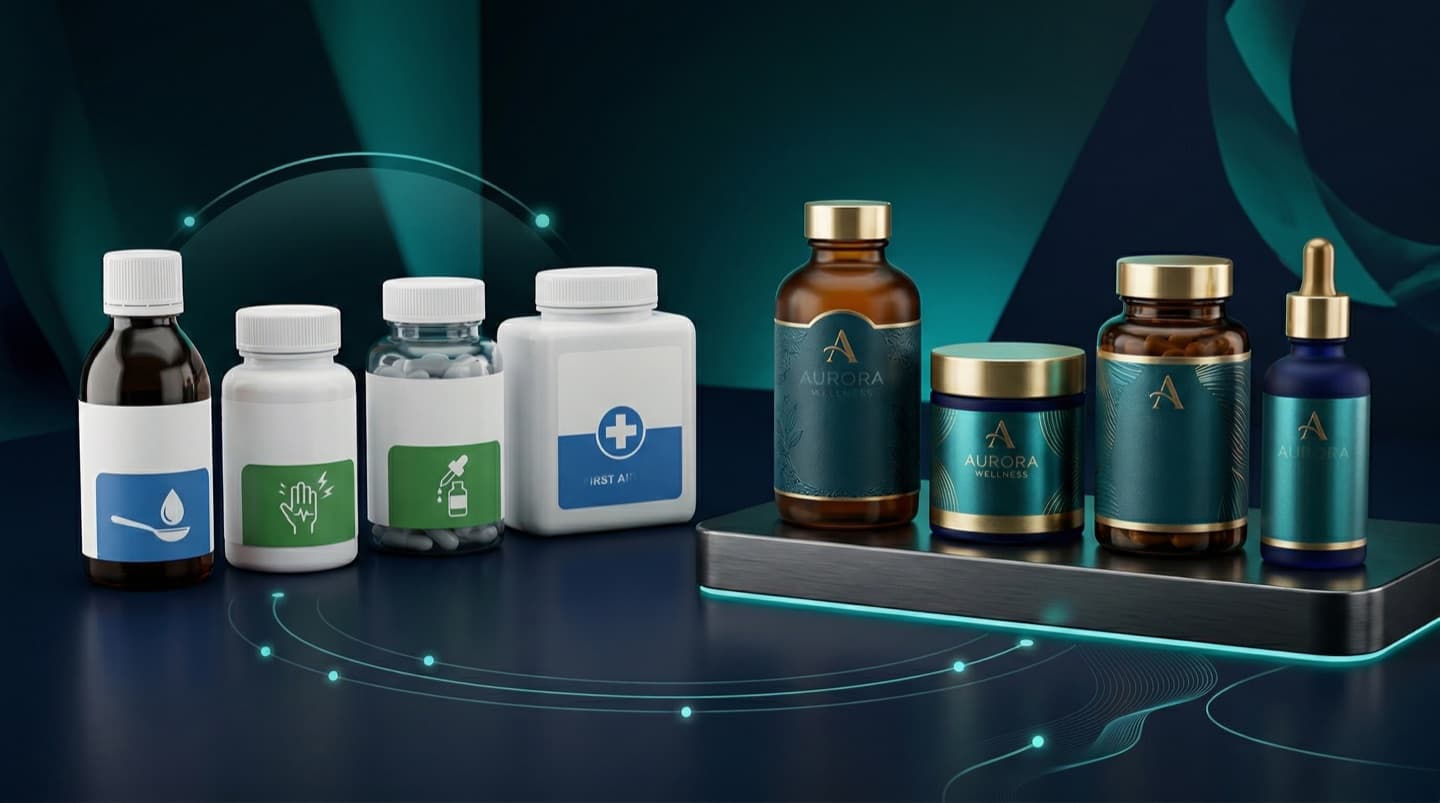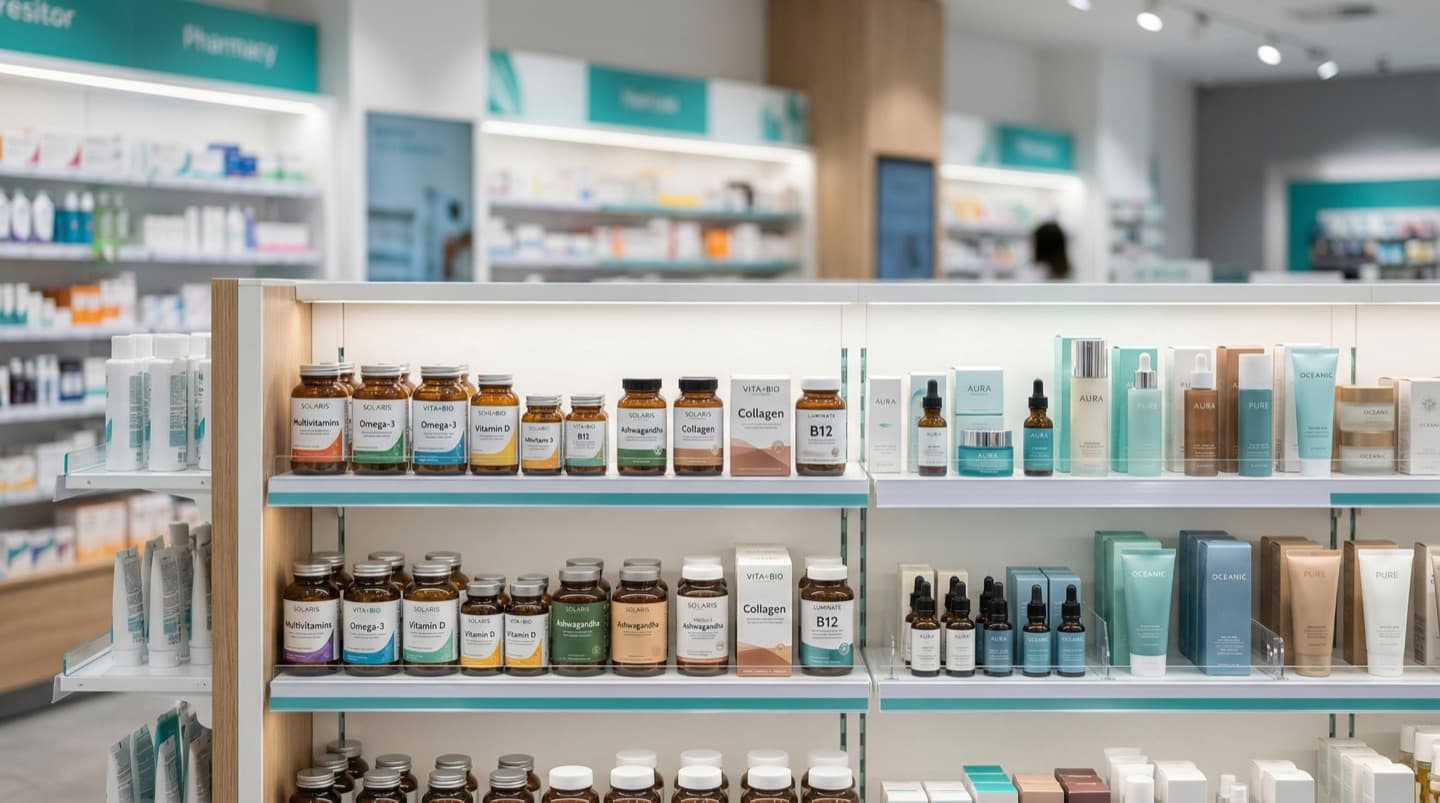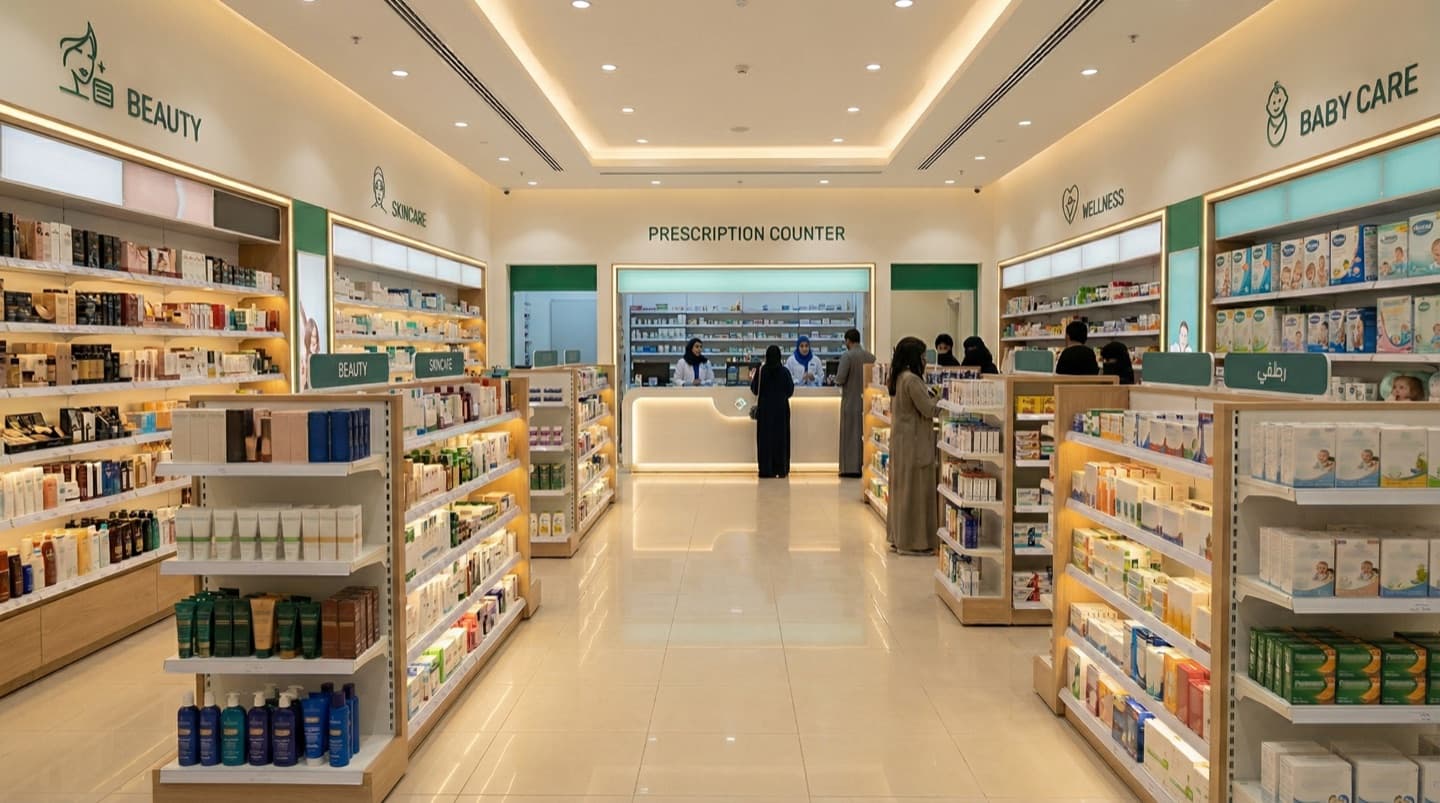
Every branded pharma company operating in the GCC has felt it — that moment when you walk into a Nahdi or Al-Dawaa store and see your category’s shelf space quietly shrinking. Not because a competitor launched a better product. Because the pharmacy chain itself launched a cheaper one with its own name on the box.
This is not a hypothetical scenario. It is happening right now across vitamins, supplements, personal care, oral care, and basic OTC categories in Saudi Arabia, the UAE, and beyond. Pharmacy chains are investing aggressively in private label — and they are getting better at it every quarter.
I have spent more than 20 years building and defending consumer healthcare brands across the GCC. I have sat across the table from category managers who told me outright that their private label margins are double what my branded product delivers. I have watched premium brands lose 15–20% volume share in a single year to a store brand that did not exist the year before. And I have helped companies fight back — sometimes by competing harder, sometimes by turning private label into an opportunity rather than a threat.
This article is the strategic guide I wish I had when I first faced this challenge. Whether you are defending a legacy brand or considering co-manufacturing for a chain, you will find practical frameworks here that you can act on immediately.
40–60%
Gross margin on private label vs. 20–30% on branded products
15–20%
Volume share a brand can lose in 1 year to a new store brand
3×
Faster growth in vitamins/supplements private label vs. category average
SAR 2B+
Estimated value of private label healthcare in KSA by 2027
Table of Contents
- The Rise of Private Label in Healthcare
- Why Pharmacy Chains Invest in Private Label
- Categories Most Vulnerable to Private Label Disruption
- How Branded Companies Should Respond
- Private Label Quality Perception and How to Compete
- The KSA Private Label Landscape: Nahdi, Al-Dawaa, and Kunooz
- Marketing Strategies to Defend Against Private Label
- Co-Manufacturing as an Opportunity
- Frequently Asked Questions
The Rise of Private Label in Healthcare
Private label is not a new concept. In grocery retail, store brands have been a fixture for decades. Tesco, Walmart, Carrefour, and Costco generate billions from their own-brand products. But healthcare has traditionally been slower to adopt private label — and for understandable reasons. When health is on the line, consumers want to trust what they are putting into their bodies. Brand names carry weight. Clinical heritage matters. The pharmacist’s recommendation carries authority.
What has changed — globally and in the GCC specifically — is that pharmacy chains have figured out how to overcome the trust barrier. They have invested in quality assurance, secured regulatory approvals from bodies like the SFDA, partnered with reputable contract manufacturers, and leveraged the institutional trust that consumers already place in the pharmacy brand itself. When a consumer trusts Nahdi as a healthcare institution, extending that trust to a Nahdi-branded vitamin supplement becomes a much shorter cognitive leap than it would be for an unknown generic brand.
The Global Picture
In the United States, store-brand health and wellness products account for roughly 22–28% of category sales by volume. In the UK, Boots’ own-brand health products are a multi-billion-pound business. In Germany, where consumers are both quality-conscious and value-oriented, private label penetration in pharmacy and drugstore channels exceeds 30% in several categories.
The GCC is still in the early stages by comparison — private label penetration in health and wellness categories is estimated at 8–14% across the region. But the trajectory is unmistakably upward. And if global patterns hold, the GCC will likely reach 20–25% penetration within the next five to seven years. That represents a massive transfer of revenue from branded products to store brands.
The KSA Context
Saudi Arabia is the largest pharmacy market in the GCC, and it is where the private label movement is most advanced. Several structural factors are accelerating adoption. Vision 2030’s push toward local manufacturing is reducing production costs for private label products. SFDA registration requirements apply equally to branded and private label products, giving consumers regulatory confidence in store brands. And the high smartphone penetration and e-pharmacy adoption rates mean that chains can use data to identify exactly which branded products are most vulnerable to substitution — and launch private label alternatives in precisely those segments.
Why Pharmacy Chains Invest in Private Label
Understanding the motivations behind private label programs is essential for any branded company that wants to craft an effective response. The reasons are not mysterious, but they are more multifaceted than most brand managers appreciate.
1. Margin Expansion
This is the most obvious and powerful driver. When a pharmacy chain sells a branded product, the gross margin typically ranges from 18–28%, depending on the category, the brand’s market power, and the negotiated trade terms. When the same chain sells its own private label product in the same category, the gross margin can reach 40–55%. That is not a marginal improvement — it is a structural shift in unit economics.
A chain that moves just 10% of its category revenue from branded to private label can materially improve its bottom line without opening a single new store or acquiring a single new customer. The financial incentive is overwhelming, and it only grows as chains gain experience in sourcing, manufacturing, and marketing their own products.
2. Customer Loyalty and Differentiation
In a market where Nahdi, Al-Dawaa, and other chains sell many of the same branded products at comparable prices, differentiation is difficult. Private label solves this problem. A consumer who buys and trusts Nahdi-branded Vitamin D has a reason to keep shopping at Nahdi that transcends price and convenience. The store brand becomes an anchor that deepens the relationship between the retailer and the shopper.
This is particularly powerful when combined with loyalty programs. A chain can offer bonus loyalty points on its own-brand products, creating a reinforcing cycle: the customer earns more rewards, returns more often, and buys more private label products each visit.
3. Supply Chain Control and Negotiation Leverage
Branded manufacturers control their own supply, pricing, and promotional calendars. This creates dependency for retailers. By developing private label alternatives, chains reduce their dependency on any single branded supplier. If a manufacturer raises prices, reduces trade margins, or experiences a supply disruption, the chain has a fallback. More importantly, the mere existence of a private label alternative gives the retailer strategic leverage in every negotiation with branded suppliers. The unspoken message is clear: we do not need you as much as you think.
4. Category Gap Filling
Sometimes the motivation is not about replacing branded products at all. If no branded player offers a specific formulation, price point, or format that consumers are asking for, the retailer can fill that gap faster than waiting for a brand to develop one. I have seen chains launch private label products in underserved niches — specific vitamin combinations, travel-sized supplements, Arabic-language packaging for traditional remedies — that no branded company had bothered to address.
| Driver | Benefit to Retailer | Threat Level to Branded |
|---|---|---|
| Margin expansion | 40–55% gross margin vs. 18–28% on branded | Very High |
| Customer loyalty | Unique products drive repeat visits and lock-in | High |
| Supply chain control | Reduced dependency on branded suppliers | Medium-High |
| Category gap filling | Faster response to unmet consumer demand | Low-Medium |
Risk Assessment
Private Label Disruption Risk by Category — GCC Pharmacy
Risk score out of 10 — red = high disruption risk, teal = defensible with brand investment
Categories Most Vulnerable to Private Label Disruption
Not all product categories face the same risk from private label. The categories where store brands thrive share specific characteristics: high purchase frequency, perceived ingredient or formulation commoditization, low emotional attachment to specific brands, and a price gap large enough to trigger switching behavior. Here is where the vulnerability is highest in GCC pharmacy retail.
Vitamins and Supplements
This is the category with the highest private label penetration in pharmacy channels globally, and the GCC is no exception. Vitamin C, Vitamin D, zinc, omega-3, and basic multivitamins are seen by many consumers as commodities. The consumer logic is simple: Vitamin D is Vitamin D — why pay SAR 45 for a branded version when the pharmacy’s own brand offers the same ingredient at SAR 29? In the US, store-brand vitamins already exceed 20% category share by volume. The GCC is trending in the same direction.
Personal Care and Hygiene
Cotton pads, cotton buds, hand sanitizers, wet wipes, basic moisturizers, and lip balms are fertile ground for private label. These products are purchased frequently, the purchase decision is driven primarily by price and availability, and the perceived performance difference between brands is minimal. A private label hand sanitizer or pack of cotton pads at 30% below the branded price is an easy switch for most shoppers.
Basic OTC Medications
Paracetamol, ibuprofen, antacids, cough syrups, and allergy medications are increasingly being offered as private label products in markets where regulations allow it. In the GCC, the SFDA’s evolving framework for OTC classification will determine how far pharmacy chains can go in this category. But the trend is clear: as regulatory pathways open up, private label will follow.
Skincare and Dermocosmetics
This category is more nuanced. Basic skincare — cleansers, basic moisturizers, sunscreen at commodity price points — is vulnerable. But specialized dermocosmetics with clinical positioning, patented active ingredients, and dermatologist endorsement remain relatively protected. The lesson here is that the level of clinical differentiation directly correlates with private label resistance. If your skincare product’s value proposition is essentially “it moisturizes,” you are vulnerable. If it is “clinically proven to reduce hyperpigmentation by 40% in 8 weeks,” you have a moat.
Oral Care
Basic toothbrushes, standard toothpaste, mouthwash, and dental floss are seeing growing private label competition. A pharmacy own-brand toothbrush at SAR 8 versus a branded one at SAR 15 is a compelling proposition for price-conscious shoppers. Premium oral care with patented technology — specialized whitening systems, prescription- grade fluoride products — retains defensibility. The commodity tier does not.
| Category | Vulnerability Level | Key Vulnerability Factor | Branded Defense Difficulty |
|---|---|---|---|
| Vitamins & Supplements | Very High | Perceived ingredient commoditization | High |
| Personal Care & Hygiene | High | Low brand loyalty, price-driven decisions | Medium-High |
| Basic OTC Medications | Medium-High | Active ingredient equivalence | Medium |
| Basic Skincare | Medium-High | Minimal perceived performance gap | Medium |
| Oral Care (basic tier) | Medium | Functional equivalence at lower price | Medium |
How Branded Companies Should Respond
Here is the uncomfortable truth that I share with every brand team I work with: private label is not winning because it is better. It is winning because branded companies have not given consumers a compelling enough reason to pay the premium. The gap between your product’s actual superiority and the consumer’s perception of that superiority is exactly where private label thrives.
Your job is to close that gap. Not by cutting price — that is a race to the bottom. But by making your premium undeniable.
Strengthen Your Value Proposition
The single most effective defense against private label is a product that genuinely cannot be replicated by a contract manufacturer working from a generic formulation brief. Proprietary delivery systems, patented ingredient combinations, clinically validated efficacy claims, unique bioavailability data — these are the moats that private label cannot cross. If your Vitamin D is formulated identically to every other Vitamin D on the market, the conversation will always come down to price. And you will lose that conversation every time.
Lead with Clinical Evidence
In healthcare categories, scientific credibility is your ultimate competitive advantage. Private label products rarely invest in clinical studies, peer-reviewed publications, or healthcare professional education programs. This is your territory. If your product has clinical data demonstrating superior bioavailability, faster onset of action, or better patient outcomes, make that data visible — to consumers, pharmacists, and physicians alike. A branded supplement with a published clinical trial is fundamentally different from a private label product with an identical ingredient list but zero clinical validation. You need to make that difference visible and tangible.
Build Brand Equity That Transcends the Product
Private label can copy your formulation. It cannot copy your brand. The brands most resilient against private label erosion are those with deep emotional connections to consumers — built through years of consistent communication, healthcare professional endorsement, and brand experiences that go beyond the product itself. Think about why parents choose a specific branded children’s vitamin over the store brand. It is not just the ingredient list. It is trust, heritage, the pediatrician’s recommendation, and the peace of mind that comes with choosing a name they recognize and believe in.
Invest in Direct Consumer Relationships
One of private label’s structural advantages is that the retailer owns the consumer relationship. They have the loyalty data, the purchase history, and the ability to communicate directly through their app, email, and SMS channels. Branded companies have traditionally relied on the retailer as the intermediary. That has to change.
Build your own consumer communities. Invest in content marketing that educates and engages. Use social media to create brand preference that consumers carry into the pharmacy with them. When a shopper walks into Nahdi already knowing they want your brand specifically, the private label product sitting next to it on the shelf becomes much less threatening.
Actionable takeaway: Audit every SKU in your portfolio and categorize each one by its defensibility against private label. Products with no meaningful differentiation beyond brand name need either a genuine product upgrade, a significant investment in brand equity building, or a pricing strategy reassessment. Ignoring the problem is not a viable option.
Private Label Quality Perception and How to Compete
Five years ago, a pharmacy own-brand supplement would have been viewed with skepticism by most Saudi consumers. That perception has changed materially, driven by three factors that branded companies often underestimate.
First, SFDA registration requirements apply equally to private label and branded products. When a consumer sees that a Nahdi-branded supplement carries the same SFDA registration as a premium branded one, the quality assurance becomes implicit. The regulatory stamp does not distinguish between brand tiers.
Second, pharmacy chains have invested heavily in packaging quality that is often indistinguishable from branded products. Clean design, professional labeling, clear dosage information, bilingual Arabic-English text — the visual quality gap that used to signal “cheap alternative” has effectively closed in most categories.
Third, and most importantly, the pharmacy chain itself carries significant brand equity. Nahdi is not an unknown name. It is a trusted healthcare institution with over 1,200 stores across the Kingdom. When Nahdi puts its name on a product, that institutional trust transfers. The same applies to Al-Dawaa, Whites, and other established chains across the GCC.
Where Trust Still Favors Branded Products
Despite the narrowing quality perception gap, there are categories where consumers still show a clear preference for established brands. Specialized dermocosmetics with dermatologist-backed positioning. Products for chronic conditions where the patient has an established relationship with the brand. Infant and child health products where parental anxiety drives a preference for recognized names. And any product where the healthcare professional has specifically recommended the branded version.
The strategic implication is clear: if you are a branded company, you need to move your positioning closer to these trust-protected zones. The more your product resembles a commodity, the more vulnerable you are. The more it looks like a specialized, clinically validated, professionally recommended healthcare solution, the more protected you become.
The brands that survive the private label wave are not the ones that cut prices. They are the ones that make their premium undeniable through genuine clinical differentiation, healthcare professional advocacy, and consumer trust that store brands cannot replicate.
The KSA Private Label Landscape: Nahdi, Al-Dawaa, and Kunooz
Understanding the specific private label strategies of the major KSA pharmacy chains is essential for any branded company operating in the Kingdom. Each chain approaches private label differently, and your competitive response should be tailored accordingly.
Nahdi Medical Company
Nahdi operates the most sophisticated private label program in GCC pharmacy retail. With over 1,200 stores and a dominant e-commerce platform, they have the scale, data, and consumer trust to build a formidable own-brand portfolio. Their private label range spans vitamins, supplements, personal care, baby care, and beauty — and it is expanding steadily.
What makes Nahdi’s approach particularly dangerous for branded companies is their use of first-party data from the Nuhdeek loyalty program. They can identify which branded products have the highest repeat purchase rates and the highest price sensitivity, and then develop private label alternatives in precisely those segments. This is data-driven disruption, and most branded companies do not have the tools to see it coming until their sell-out numbers start declining.
Nahdi’s private label products are typically positioned at 25–35% below the branded equivalent. The quality perception is strong, supported by SFDA-compliant manufacturing, professional packaging, and the Nahdi brand halo.
Al-Dawaa Pharmacies
Al-Dawaa’s private label strategy is narrower but strategically focused. Their own-brand products concentrate in personal care, hygiene, and wellness supplements — specifically in high-volume, high-frequency categories where brand switching costs for consumers are low. Hand sanitizers, cotton products, basic supplements, and personal hygiene items are the categories where Al-Dawaa’s house brands have gained the most traction.
Al-Dawaa’s approach is less about building a comprehensive private label portfolio and more about capturing margin in commodity categories where branded differentiation is weakest. For branded companies competing in these categories, the strategic implication is that Al-Dawaa is less likely to challenge your premium, specialized products — but your commodity-tier SKUs are directly in the crosshairs.
Kunooz Pharmacy
Kunooz is a smaller chain compared to Nahdi and Al-Dawaa, but it is worth watching. Their private label activity has been more selective, focusing on personal care and basic health products where they can offer meaningful savings. Kunooz’s approach reflects a common strategy among mid-tier chains: use private label as a margin tool in categories where branded competition is most intense and price sensitivity is highest, rather than attempting to build a comprehensive own-brand portfolio across the store.
| Chain | Private Label Approach | Focus Categories | Pricing vs. Branded | Maturity Level |
|---|---|---|---|---|
| Nahdi | Comprehensive, data-driven | Vitamins, supplements, personal care, baby, beauty | 25–35% below | Advanced |
| Al-Dawaa | Focused, high-frequency categories | Personal care, hygiene, wellness supplements | 20–30% below | Growing |
| Kunooz | Selective, margin-focused | Personal care, basic health products | 20–30% below | Emerging |
Marketing Strategies to Defend Against Private Label
Knowing the threat is not enough. You need a tactical playbook. Here are the specific marketing strategies that I have seen work in the GCC pharmacy context — strategies that go beyond generic advice and address the unique dynamics of this market.
1. HCP Recommendation Programs
In KSA, the pharmacist’s recommendation is the single most powerful influence on OTC purchase decisions. A pharmacist who actively recommends your branded product over the store’s own brand is the strongest defense you can have. Invest in pharmacist education programs that give them clinical reasons to recommend your product. Provide concise clinical data summaries they can reference. Create CME (continuing medical education) partnerships that position your brand as the scientifically credible choice. The pharmacist is your last line of defense at the point of purchase — invest in that relationship accordingly.
2. In-Store Visibility and Shopper Marketing
Private label benefits from preferential shelf placement — the retailer controls the planogram. You cannot control where your product sits on the shelf, but you can invest in visibility that intercepts the shopper before they reach the private label alternative. Gondola end displays, digital screen advertising within the pharmacy, counter displays near checkout, and point-of-sale materials that communicate your clinical credentials — these are the tactical tools that offset shelf placement disadvantage. Negotiate these placements as part of your trade terms, and treat them as non-negotiable budget items, not discretionary spending.
3. Consumer Education Campaigns
Create content that educates consumers about what differentiates your product without explicitly naming private label as the competitor. A campaign that explains why bioavailability matters in a Vitamin D supplement, or what to look for in a quality multivitamin, implicitly highlights the advantages of your branded product. This approach works across social media, in-app advertising on pharmacy platforms, and your owned digital channels. The goal is to create informed consumers who understand that not all products in a category are equal — even if the ingredient list looks similar.
4. Loyalty and Subscription Models
Reduce the consumer’s incentive to switch by locking in repeat purchases before they reach the pharmacy shelf. Direct-to-consumer subscription models for supplements, auto-refill programs through e-pharmacy platforms, and exclusive offers for repeat purchasers all create switching friction. If a consumer is already subscribed to a 90-day auto-delivery of your branded Vitamin D, the private label alternative on the shelf is irrelevant. Several DTC supplement brands globally have proven this model works, and the same principles apply in the GCC through platforms like Nahdi Online and other e-pharmacies.
5. Pack Size and Format Innovation
One underutilized strategy is making direct price comparison difficult. Offer pack sizes, dosage forms, or product combinations that private label does not match. A branded supplement offered as a 90-day supply in convenient daily sachets is harder to compare directly to a private label bottle of 30 tablets. Innovation in format, delivery mechanism, and convenience can create separation that pure formulation cannot. I have seen brands successfully use effervescent tablets, gummy formats, and combination packs to differentiate against private label in categories where the base formulation is identical.
6. Digital Shelf Optimization
On e-pharmacy platforms, private label products often benefit from algorithmic priority — the chain’s own products appear first in search results and category listings. Branded companies need to invest in digital shelf optimization: keyword-rich product titles, enhanced product content with clinical claims, high-quality imagery, and ratings and review management. The digital shelf is increasingly where the purchase decision is made, and losing visibility online is as damaging as losing shelf space in-store.
For marketers looking for frameworks and peer discussion on defending brand share against private label, the PharmaGrowth community is where GCC pharma marketers share real-world strategies and results.
Co-Manufacturing as an Opportunity
Here is a perspective that many branded companies resist but should seriously consider: if you cannot beat private label, you can profit from it. Co-manufacturing — producing private label products for pharmacy chains — is not surrender. It is a strategic decision that can strengthen your business in several ways.
Why Consider Co-Manufacturing
- Manufacturing capacity utilization.If your production facility has excess capacity, manufacturing private label products for a chain fills that capacity, reduces your per-unit fixed costs, and generates incremental revenue. The alternative — idle capacity — is a pure cost.
- Relationship deepening.A chain that relies on you to produce its private label products has a vested interest in maintaining a strong commercial relationship with you. This relationship can translate into better trade terms, preferential shelf space for your branded products, and early insight into the chain’s category strategy.
- Competitive intelligence. When you manufacture the private label product, you know its exact formulation, its cost structure, and its margin profile. This intelligence is invaluable for positioning your branded product against it.
- Market entry strategy.For companies entering the GCC market, co-manufacturing for a major chain can serve as a low-risk entry point. You build manufacturing credibility, establish regulatory compliance, and develop channel relationships — all while generating revenue.
The Risks to Manage
Co-manufacturing is not without risks. The most significant is cannibalization — the private label product you manufacture may directly compete with your branded product on the same shelf. Managing this requires careful portfolio segmentation. Your branded products should occupy a clearly differentiated premium tier with genuine product advantages that the private label version (even though you made it) does not replicate. If you are manufacturing the exact same product under two labels, you are creating a problem for yourself.
There is also the reputational risk if consumers discover that the same factory produces both the premium branded product and the budget private label version. In healthcare categories, this can undermine the premium positioning you are trying to protect. The mitigation is to ensure genuine formulation or quality differences between your branded and private label production lines.
Actionable takeaway:If you have manufacturing capabilities, evaluate the co-manufacturing opportunity objectively. Model the financial impact on your P&L, including potential cannibalization effects. In many cases, the incremental revenue and relationship benefits outweigh the risks — particularly if your branded products have genuine differentiation that the private label version does not match.
For a deeper strategic conversation about portfolio decisions like this, explore the PharmaGrowth coaching programs where we work through these trade-offs with experienced pharma leaders.
Frequently Asked Questions
What is private label in the healthcare and pharmacy context?
Private label in healthcare refers to products manufactured by a third-party contract manufacturer but sold under the pharmacy chain’s own brand name. The retailer owns the brand, controls the marketing, sets the price, and captures the margin. Examples include Nahdi-branded vitamins, Al-Dawaa house-brand personal care products, and similar own-brand ranges offered by pharmacy chains across the GCC. These products must meet the same SFDA regulatory requirements as branded alternatives.
Which product categories are most at risk from private label in KSA pharmacies?
The most vulnerable categories are those perceived as commodities with low brand differentiation: vitamins and basic supplements, personal care and hygiene products, basic oral care, first aid supplies, and baby care essentials. Categories with strong clinical differentiation, patented active ingredients, and healthcare professional endorsement — such as specialized dermocosmetics and prescription-adjacent OTC products — remain more protected.
How can branded pharma companies compete against pharmacy private label products?
The most effective strategies include investing in genuine product differentiation that private label cannot replicate, leading with clinical evidence and scientific credibility, building healthcare professional recommendation programs, investing in digital consumer relationships and content marketing, and innovating in pack sizes and delivery formats that make direct price comparison difficult. Price-cutting alone is not a sustainable defense — it erodes margins without building long-term competitive advantage.
Is co-manufacturing private label products for pharmacy chains a good strategy?
It depends on your strategic position. Co-manufacturing can fill excess manufacturing capacity, deepen relationships with key accounts, provide competitive intelligence, and generate incremental revenue. However, it carries risks of cannibalization and brand perception damage if not managed carefully. The key is ensuring your branded products have genuine differentiation that the private label version does not replicate, so the two lines serve different consumer segments rather than competing directly.
How is the KSA private label landscape expected to evolve over the next five years?
Private label penetration in GCC healthcare categories is expected to grow from an estimated 8–14% today to 20–25% within five to seven years, following patterns seen in mature markets like the US and UK. Key drivers include e-pharmacy growth (where algorithms can prioritize own-brand products), local manufacturing expansion under Vision 2030, premiumization of private label into mid-tier and premium segments, and increasingly sophisticated data-driven category management by major pharmacy chains.
Conclusion
Private label in healthcare is not a threat to be feared — it is a competitive reality to be managed. The pharmacy chains building their own brands are responding to genuine consumer demand for accessible, affordable healthcare products. They are not doing anything wrong. They are doing it well, and they are getting better at it every year.
The burden falls on branded companies to justify their premium. That justification cannot rest on historical market position or brand inertia alone. It must be grounded in genuine product superiority, clinical evidence, brand equity that consumers can feel, and marketing that communicates value in terms that matter to the consumer standing in the pharmacy aisle, comparing two products side by side.
I have seen too many branded companies respond to private label with denial, then panic pricing, then margin erosion that makes the business unsustainable. The companies that navigate this transition successfully treat private label as a catalyst for raising their own game — innovating harder, marketing smarter, and building deeper relationships with both consumers and the healthcare professionals who influence them.
The GCC healthcare market is growing rapidly. There is room for both branded and private label products to thrive. But room does not mean guaranteed. You have to earn it every day, at every shelf, in every pharmacy.
If you are navigating the private label challenge and want access to strategic frameworks, peer discussion, and direct coaching from experienced GCC pharma leaders, join the PharmaGrowth community. It is where pharmaceutical marketing professionals across the MENA region come together to share strategies, solve real business problems, and accelerate their growth.
Sherif Al-Kady is a pharmaceutical marketing strategist with 20+ years of experience building consumer healthcare and dermocosmetic brands across the GCC and MENA region. He is the founder of PharmaGrowth, a platform dedicated to helping pharma marketers grow their brands and careers through strategic excellence.