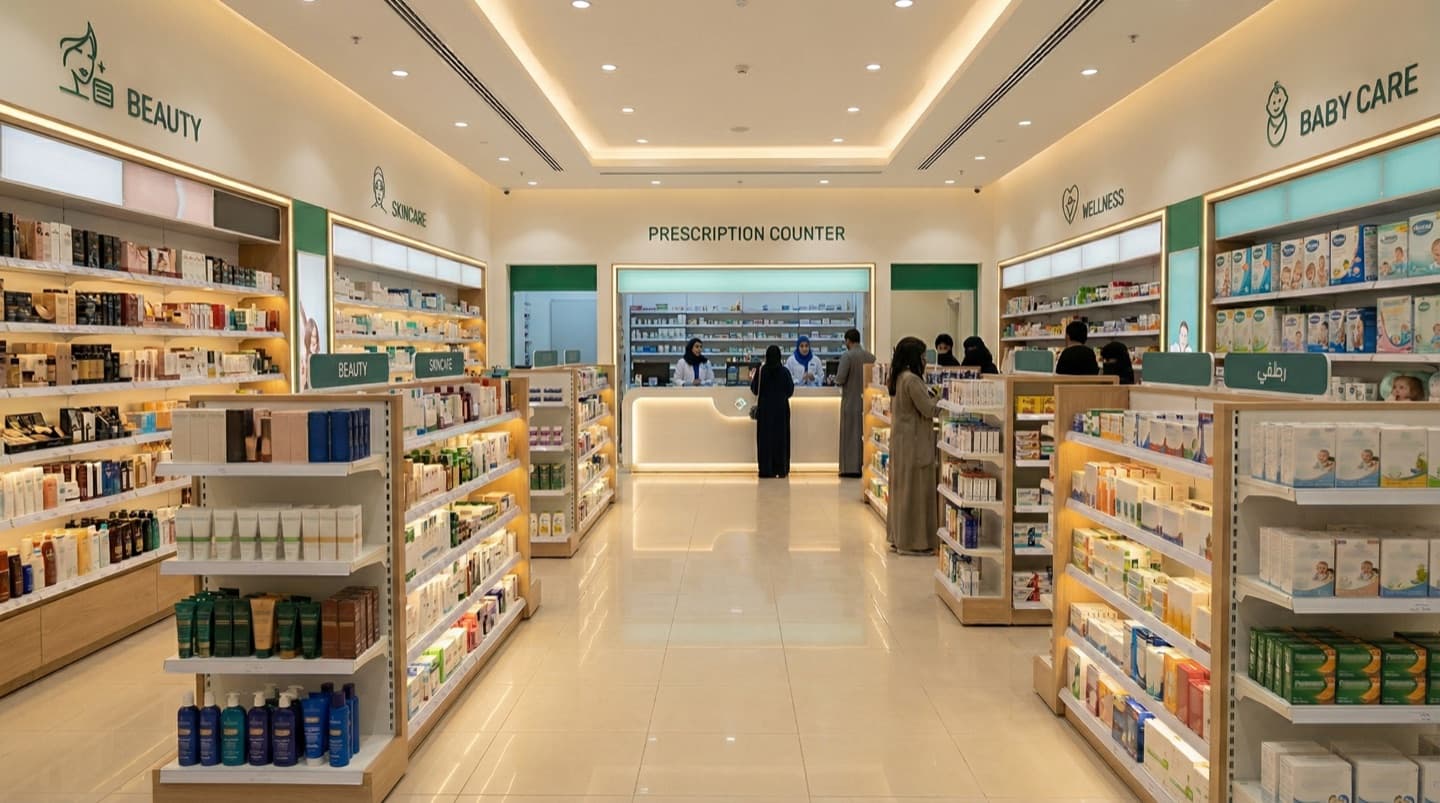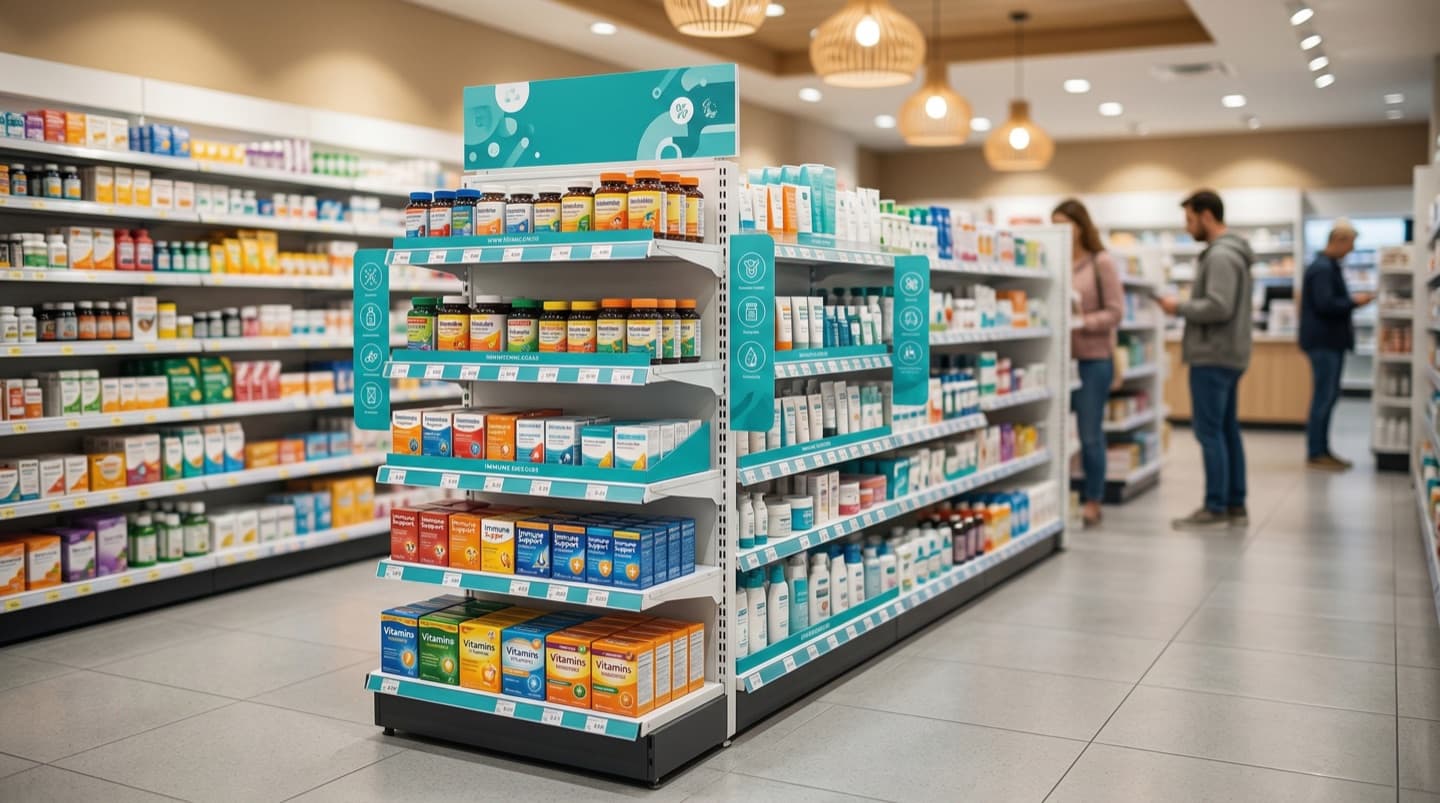
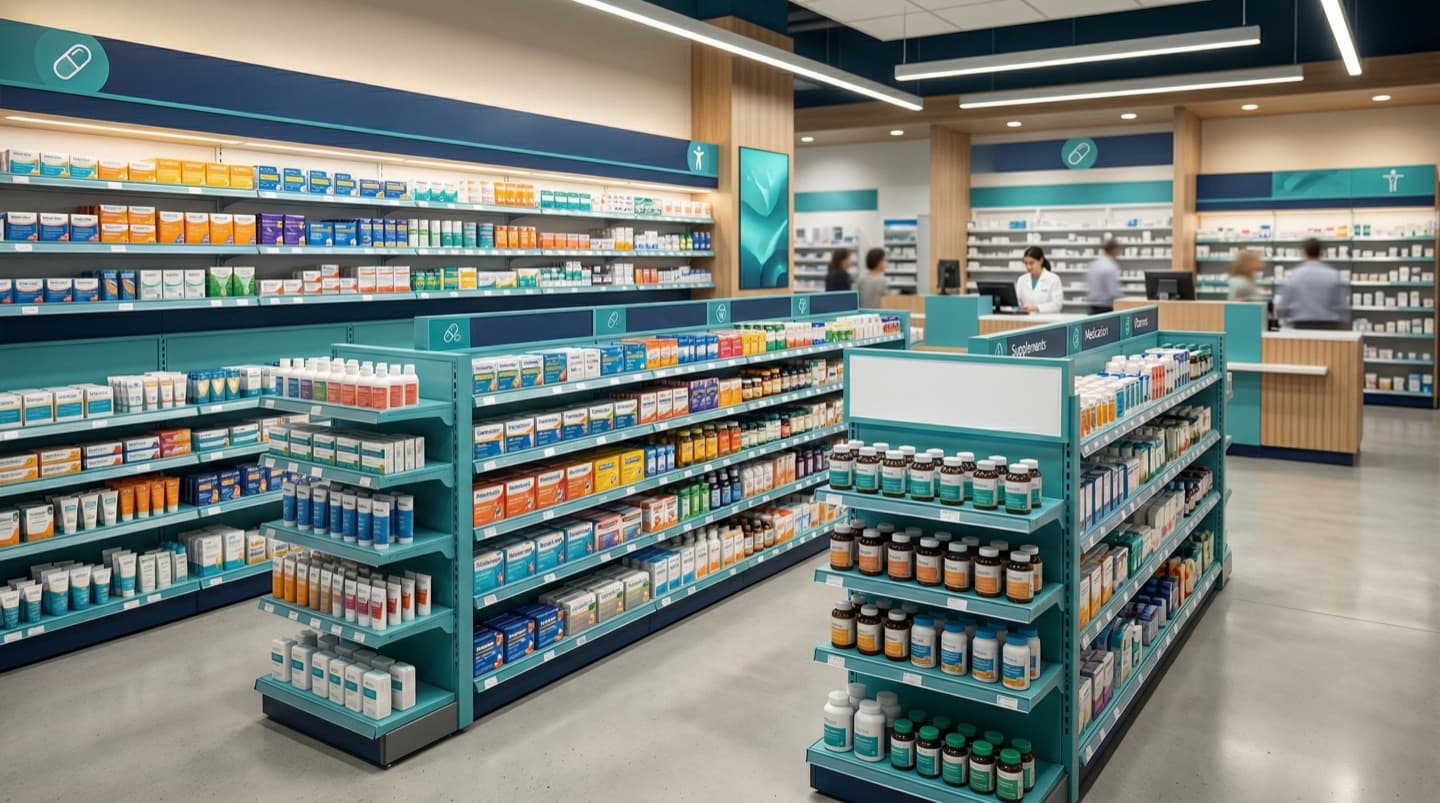
Trade marketing is the single most misunderstood function in the pharmaceutical industry. Ask a pharma executive what trade marketing does, and you will hear something vague about shelf displays and discount negotiations. Ask the same question to someone in FMCG, and they will describe a strategic discipline that shapes how products move through channels, win at the point of purchase, and deliver measurable commercial results.
The gap between those two answers is costing pharmaceutical companies millions in lost market share every year — particularly in markets like Saudi Arabia, the UAE, and the wider GCC where the pharmacy channel is evolving faster than most brand teams realize.
I have spent over twenty years building pharmaceutical and consumer healthcare brands across the MENA region. I have negotiated planogram positions with Nahdi’s category management team, built trade promotion calendars for Al-Dawaa, trained field forces on in-store execution, and restructured trade marketing teams from the ground up. This guide is everything I have learned — organized into a framework you can apply immediately, whether you are a brand manager, commercial director, or trade marketing specialist.
60%
Of KSA OTC purchasing decisions influenced at the pharmacy
3–5×
Higher sales lift from planogram compliance vs. no-planogram
40%
Of pharma brands have no formal trade marketing function
SAR 28B
KSA pharmaceutical market size — pharmacy channel dominates
Table of Contents
- What Trade Marketing Means in Pharma (vs. FMCG Trade Marketing)
- Why Pharma Trade Marketing Matters in 2026
- The 5 Pillars of Pharma Trade Marketing
- Trade Marketing for Pharmacy Chains in KSA
- Digital Trade Marketing: The New Frontier
- Measuring Trade Marketing ROI
- Common Trade Marketing Mistakes in Pharma
- Building a Trade Marketing Team Structure
- Frequently Asked Questions
What Trade Marketing Means in Pharma (vs. FMCG Trade Marketing)
Trade marketing is the discipline of marketing tothe trade channel — the intermediaries between your company and the end consumer or patient. In pharmaceuticals, that means pharmacies, pharmacy chains, hospital pharmacies, polyclinics, distributors, and increasingly, e-pharmacies and online health platforms.
The core objective is straightforward: make sure your product is available where patients look for it, visible when they arrive, recommended by the person behind the counter, and competitively positioned against alternatives. But the execution is anything but simple, because pharma trade marketing operates at the intersection of commercial strategy, clinical credibility, and regulatory compliance.
Most pharmaceutical professionals confuse trade marketing with sales support. It is not. Trade marketing is a strategic function that sits between marketing and sales, translating brand strategy into channel execution. The brand team decides what the brand stands for. The trade marketing team decides how that brand wins at the shelf and the counter.
How Pharma Trade Marketing Differs from FMCG
Many pharma companies hire trade marketing talent from FMCG — from Procter & Gamble, Unilever, Nestlé — and expect them to apply the same playbook. While there are useful parallels, the differences are significant enough to make a pure FMCG approach dangerous in pharma.
| Dimension | FMCG Trade Marketing | Pharma Trade Marketing |
|---|---|---|
| Channel gatekeeper | Retail buyer / category manager | Pharmacist (clinical authority) |
| Purchase decision | Consumer-driven, impulse possible | Often guided by pharmacist recommendation or prescription |
| Regulatory constraints | Minimal (pricing, labeling) | Significant (SFDA, MOH, claims restrictions, sampling rules) |
| Product complexity | Low — consumer understands the product | High — requires clinical explanation and counseling |
| Promotion mechanics | Price promotions, BOGOs, end-cap displays | Education + promotion; sampling restrictions apply |
| Substitution dynamics | Brand loyalty drives repeat purchase | Pharmacist can substitute at the counter |
| Shopper behavior | Self-selection from shelf | Consultation-driven, often behind counter |
The pharmacist substitution factor is the single most important differentiator. In KSA, when a patient walks into a pharmacy asking for a sunscreen, a cough remedy, or a hair loss treatment, the pharmacist’s recommendation is often the decisive factor. Your product can have the best consumer marketing campaign in the Kingdom, but if the pharmacist behind the counter is pushing a competitor — because of better margins, stronger relationships, or superior training — you lose the sale at the last meter.
This is why I tell every brand team I work with: trade marketing in pharma is not logistics with a marketing label. It is a clinical engagement discipline disguised as a commercial function. If you approach it as a discount negotiation, you will always be outmaneuvered by competitors who approach it as relationship building.
Why Pharma Trade Marketing Matters in 2026
The case for investing in pharma trade marketing has never been stronger. Several forces are converging in 2026 that make this function not just important, but existential for brands competing in the GCC pharmacy channel.
1. Channel Fragmentation Is Accelerating
Ten years ago, pharma trade marketing in KSA meant managing relationships with Nahdi, Al-Dawaa, a handful of regional chains, and independent pharmacies. Today, the channel landscape includes traditional pharmacy chains, hospital pharmacy networks, polyclinic dispensaries, e-pharmacy platforms (Nahdi Online, Amazon Pharmacy SA, Nayagara), health and beauty hybrid retailers, and direct-to-consumer channels. Each channel has different buyer behaviors, different margin expectations, different merchandising capabilities, and different shopper profiles.
A trade marketing strategy that treats all these channels the same way is a trade marketing strategy that fails everywhere. The discipline required to build channel-specific plans — with tailored assortments, pricing architectures, and activation programs — is exactly what trade marketing provides.
2. E-Commerce Disruption Is Reshaping the Shelf
Online pharmacy sales in KSA grew by over 30% in 2025. The “shelf” is no longer just a physical gondola — it is a search results page on Nahdi Online, a product listing on Amazon.sa, a sponsored banner on a health app. Trade marketing teams that only know how to negotiate physical shelf space are already falling behind.
Digital trade marketing — covering product listing optimization, digital shelf analytics, e-retailer media spend, and online promotion mechanics — is now as critical as physical in-store execution. And in most pharma organizations, nobody owns it. It falls into a gap between the brand team, the digital team, and the sales team. That gap is a trade marketing responsibility.
3. Pharmacy Chains Are Demanding Category Partnerships
Major pharmacy chains in KSA — particularly Nahdi and Al-Dawaa — are evolving from simple retailers into category management partners. They do not want suppliers who show up with discount offers. They want partners who bring shopper insights, category growth plans, and execution capabilities that drive total category performance, not just individual brand sales.
Companies with mature trade marketing functions win these partnerships. Companies without them get relegated to transactional supplier status — competing on price alone, which is a race to the bottom.
Actionable takeaway:If your organization does not have a dedicated trade marketing function — or if trade marketing is buried under the sales team as a support role — 2026 is the year to restructure. The market dynamics demand it.
Industry Benchmark
Where Pharma Companies Are Strong vs. Weak in Trade Marketing
Average capability scores across GCC pharma companies audited — 10 = best-in-class, red = critical gap
The 5 Pillars of Pharma Trade Marketing
After two decades of building trade marketing capabilities across the GCC, I use a five-pillar framework to structure trade marketing strategy. Each pillar must be addressed for the overall program to deliver sustainable results. Most companies I audit are strong on one or two pillars and weak on the rest.
Pillar 1: Channel Strategy
Channel strategy answers the fundamental question: where should your products be available, and how should they be positioned in each channel? This goes beyond simple distribution targets. It encompasses channel prioritization, assortment planning by channel format, pricing architecture across channels, and channel conflict management.
In the GCC pharma context, a strong channel strategy must address:
- Channel segmentation:Not all pharmacies are equal. A flagship Nahdi in Riyadh’s Olaya district has different shopper profiles, basket sizes, and category dynamics than a small independent pharmacy in Abha. Your trade plan should reflect these differences.
- Must-stock lists by channel: Define which SKUs are essential for each channel format. A dermocosmetic brand might need its full regime range in chain pharmacies but only its hero SKUs in independent pharmacies.
- Channel-specific pricing: Your pricing architecture should account for different margin expectations across channels while maintaining price parity for consumers.
- Online vs. offline channel management: As e-pharmacy grows, managing channel conflict between physical and online becomes critical. A product priced at SAR 99 in-store but SAR 79 online creates friction with your pharmacy chain partners.
Pillar 2: Trade Promotions
Trade promotions are the tactical tools you deploy to drive sell-in and sell-out at the channel level. But in pharma, trade promotions are not just about discounts. The most effective trade promotion programs combine financial incentives with non-financial value creation.
Effective pharma trade promotion mechanics include:
- Volume-based rebates:Tiered discount structures tied to sell-in or sell-out targets. These work, but they must be designed carefully to avoid channel loading — where distributors buy excess inventory to hit a target and then return unsold stock.
- Pharmacist incentive programs: Recommendation bonuses, mystery shopper rewards, and loyalty programs that incentivize pharmacists to recommend your product over competitors. These must be structured within SFDA and MOH compliance boundaries.
- Consumer-facing pharmacy promotions: Bundle offers, gift-with-purchase, seasonal health campaigns, and loyalty point bonuses that drive sell-out at the pharmacy level.
- Sampling programs:Product sampling through pharmacy channels, linked to pharmacist recommendation. SFDA guidelines govern what can be sampled, where, and under what conditions — OTC products and cosmetics have more flexibility than prescription medications.
Pillar 3: In-Store Execution
In-store execution is where strategy becomes reality. It covers everything that happens at the physical point of purchase: shelf placement, planogram compliance, POS materials, cross-merchandising, seasonal displays, and gondola end-cap activations.
The biggest challenge in pharma in-store execution across the GCC is the gap between what head office agrees to and what actually happens at store level. I have seen companies invest SAR 500,000 in premium POS materials that never get placed — or get placed and removed within a week because the pharmacy staff needed the space for something else.
Closing this execution gap requires:
- Execution compliance monitoring:Regular audits — either through field force visits, mystery shopping, or image recognition technology — to verify that what was agreed is what was executed.
- Store-level scorecards: Rate each store on execution quality and tie field force performance evaluations to compliance scores, not just sales volume.
- Simple, durable POS materials: Design point-of-sale materials that pharmacy staff can install easily and that withstand the daily reality of a busy pharmacy environment. Complex displays that require 30 minutes to set up will not survive.
Pillar 4: Shopper Insights
Shopper insights are the intelligence layer that makes every other pillar more effective. Understanding how patients and consumers navigate the pharmacy, what triggers their purchase decisions, and where they look for information transforms trade marketing from guesswork into precision.
In the GCC pharmacy context, key shopper insight questions include:
- What percentage of purchases in your category are planned vs. impulse vs. pharmacist-recommended?
- How does the shopper journey differ between chain pharmacies and independents?
- What role does price play relative to brand familiarity and pharmacist recommendation in the purchase decision?
- How are online and offline shopper journeys interconnected — does the patient research online and buy in-store, or vice versa?
Companies that invest in regular shopper research — even simple exit interviews at pharmacy level — consistently outperform those that rely on assumptions about shopper behavior.
Pillar 5: Retailer Relationships
The final pillar is the quality of your relationships with key retail partners. In the GCC pharmacy market, where three to four major chains control over 50% of the retail pharmacy value, the strength of your key account relationships directly impacts your market position.
Building strong retailer relationships in pharma goes beyond annual contract negotiations. It requires:
- Joint business planning: Align on annual targets, promotional calendars, and investment levels with your top retail partners. Conduct quarterly business reviews with data-driven performance assessments.
- Category captain status:Position your company as the thought leader in your therapeutic category. Bring shopper insights, market data, and growth recommendations that benefit the retailer’s entire category — not just your brand.
- Dedicated key account teams: Major pharmacy chains deserve dedicated resources. A key account manager who also handles 50 independent pharmacies cannot give Nahdi or Al-Dawaa the strategic attention they require.
Actionable takeaway:Audit your trade marketing capabilities against all five pillars. Most pharma companies I work with are strong on distribution (Pillar 1) and promotions (Pillar 2), moderate on in-store execution (Pillar 3), weak on shopper insights (Pillar 4), and have almost no formal retailer relationship management (Pillar 5). If that describes your organization, prioritize Pillars 4 and 5 first — they have the highest marginal return.
Trade Marketing for Pharmacy Chains in KSA
Saudi Arabia’s pharmacy retail landscape is dominated by a small number of powerful chains. Understanding how each one operates — their buying processes, category management structures, and what they value in supplier partnerships — is essential for effective trade marketing. Let me walk through the major players.
Nahdi Medical Company
Nahdi is the largest pharmacy chain in Saudi Arabia with over 1,200 outlets and a rapidly growing online platform. They have invested heavily in category management, loyalty programs (Nuhdeek), and health-and-beauty positioning that blurs the line between pharmacy and beauty retail.
What Nahdi expects from trade marketing partners:
- Category growth plans backed by market data and shopper insights, not just brand-level promotion requests
- Joint promotional calendars aligned with Nahdi’s seasonal campaigns (Ramadan health, back-to-school, summer skin care)
- Digital activation support for Nahdi Online and the Nuhdeek app, including sponsored listings and targeted push notifications
- Pharmacist training programs that Nahdi can integrate into their internal learning management system
- Willingness to invest in Nahdi’s own promotional channels (in-store screens, catalog features, loyalty point partnerships)
Al-Dawaa Pharmacies
Al-Dawaa operates over 900 pharmacies across KSA with particularly strong penetration in the Central and Eastern regions. Their buying structure is more centralized than Nahdi’s, with category decisions made at the head office level and less flexibility for store-level activation.
Effective trade marketing approaches for Al-Dawaa:
- Strong relationships with the central buying and category management team are more important than field-level relationships
- Volume-based trade deals with clear sell-through commitments perform better than complex multi-mechanic promotions
- In-store visibility programs must be designed for Al-Dawaa’s specific store layouts and fixture standards
Kunooz Pharmacies
Kunooz is a growing mid-tier chain with over 300 outlets, positioned as a value-oriented alternative to Nahdi and Al-Dawaa. Their customer base skews more price-sensitive, and their category management function is less developed than the top two chains.
For trade marketing teams, Kunooz represents an opportunity to build share in a less contested environment. The trade investment required per store is lower, the negotiation process is simpler, and there is more flexibility for in-store activation. However, the execution monitoring challenge is greater because Kunooz’s store-level compliance infrastructure is less mature.
Independent Pharmacies
Despite chain consolidation, independent pharmacies still account for roughly 30–35% of the KSA retail pharmacy market. They are harder to reach at scale but often have stronger pharmacist influence on the purchase decision, because the pharmacist-owner has a direct financial interest in recommending higher-margin products.
Trade marketing for independents requires a different model — typically managed through distributors who have established relationships with independent pharmacy networks. The trade mechanics that work here are simpler: competitive margins, reliable supply, sampling support, and occasional training visits from medical representatives.
Actionable takeaway: Do not apply a single trade marketing plan across all pharmacy formats in KSA. Build tiered trade plans: a strategic partnership approach for Nahdi and Al-Dawaa, a growth-oriented approach for mid-tier chains like Kunooz, and a distributor-enabled approach for independents.
Digital Trade Marketing: The New Frontier
Digital transformation is reshaping trade marketing in pharma just as it is reshaping every other commercial function. The companies that figure out digital trade marketing first will have a compounding advantage over those that treat online as an afterthought.
E-Retailer Activations
E-pharmacy platforms like Nahdi Online, Amazon Pharmacy SA, and Noon have their own trade marketing ecosystems. Just as you invest in physical shelf space and in-store visibility, you need to invest in digital visibility on these platforms:
- Sponsored product listings:The digital equivalent of a gondola end-cap. On Amazon.sa, sponsored products appear at the top of search results and can increase product visibility by 300–500%.
- Platform-specific promotions:Each e-retailer has its own promotional mechanics — flash sales, bundle deals, coupon codes, loyalty point multipliers. Understanding and leveraging these mechanics is a trade marketing skill.
- Banner advertising:Premium banner placements on e-pharmacy homepages and category pages. These drive awareness and click-through but require creative assets optimized for each platform’s specifications.
- Cross-selling and bundle mechanics: Replicating the in-store regime selling approach in a digital format. A dermocosmetic brand, for example, can create a cleanser + serum + moisturizer bundle on the product page.
Digital Shelf Management
The digital shelf is the online equivalent of your physical shelf position. It encompasses everything that determines whether a shopper finds and chooses your product online:
- Product listing quality: Optimized titles, descriptions, bullet points, images, ingredient lists, and A+ Content (on Amazon). A poorly optimized listing is the digital equivalent of being hidden on the bottom shelf.
- Search ranking:Just as physical shelf position matters in-store, search ranking matters online. Understanding each platform’s search algorithm and optimizing your listings accordingly is essential.
- Ratings and reviews: A 4.5-star product with 200 reviews will outsell a 3.8-star product regardless of other factors. Building a systematic approach to generating authentic reviews is a trade marketing priority.
- Stock availability monitoring: Even a few hours of stockout on a top-selling SKU costs you search rank that takes weeks to recover. Real-time stock monitoring across all e-retailer platforms should be standard practice.
AI-Powered Shelf Analytics
Image recognition technology now allows companies to audit shelf compliance remotely. Field representatives take a photo of the shelf, and AI-powered tools analyze product placement, facing counts, pricing compliance, and competitor positioning in seconds. Companies like Trax and ParallelDots are already active in the Middle East market, and several GCC pharmacy chains are piloting smart shelf solutions.
The most progressive companies in KSA are combining physical shelf audits with digital shelf analytics to create a unified view of their trade execution across both channels. This integrated approach reveals insights that neither data source provides alone — for example, how changes in physical shelf position correlate with changes in online search ranking for the same product.
Actionable takeaway: If you do not have a digital trade marketing strategy for e-pharmacies, start today. Audit your product listings on Nahdi Online and Amazon Pharmacy SA. Optimize titles, descriptions, and images. This is the lowest-hanging fruit in digital trade marketing and costs almost nothing to execute. For more frameworks on digital commercial strategy, explore the PharmaGrowth community.
Measuring Trade Marketing ROI
One of the biggest frustrations I hear from commercial directors across the GCC is: “We spend millions on trade marketing, but we cannot prove it works.” The problem is rarely that trade marketing does not deliver results. The problem is that most companies measure it poorly — or do not measure it at all.
The Three KPIs That Matter Most
While there are dozens of trade marketing metrics you could track, three KPIs provide the clearest picture of trade marketing effectiveness:
1. Sell-Through Rate
Sell-through rate measures what percentage of inventory shipped to the trade channel actually sold to consumers within a given period. It is calculated as sell-out divided by sell-in, expressed as a percentage.
A healthy sell-through rate for consumer healthcare products in KSA pharmacy channels is 85–95% on a rolling three-month basis. Below 80% signals overstocking, poor demand generation, or both. Above 95% might signal under-distribution — you could be selling more if you had more stock in more stores.
2. Share of Shelf
Share of shelf measures your brand’s physical presence relative to competitors in the same category. It includes the number of facings, shelf position (eye-level vs. bottom shelf), and presence of POS materials. In the digital context, the equivalent is share of search — how often your product appears in the top results for relevant category searches.
The benchmark to aim for: your share of shelf should be at least equal to your market share. If you have 25% market share in the sunscreen category but only 15% share of shelf at Nahdi, you have an execution gap that trade marketing should close.
3. Promotional Lift
Promotional lift measures the incremental sales generated by a trade promotion compared to baseline sales. It is the most direct measure of whether your trade investment is generating returns.
The formula:
Promotional Lift = (Sales During Promotion − Baseline Sales) ÷ Baseline Sales × 100%
In GCC pharmacy channels, a well-executed trade promotion should deliver a promotional lift of 30–80% for consumer healthcare products. Below 20% lift suggests the promotion mechanics are too weak. Above 100% lift raises questions about whether you are buying volume that will be returned or simply pulling forward purchases that would have happened anyway.
The Trade Marketing Measurement Framework
Beyond these three core KPIs, effective trade marketing measurement tracks metrics at three levels:
| Level | Example Metrics | Data Source |
|---|---|---|
| Input (Investment) | Trade spend as % of net sales, spend per SKU, spend per pharmacy, promotion frequency | Internal finance, trade budget tracker |
| Output (Channel Change) | Distribution gains, shelf share increase, POS compliance rate, pharmacist training completion | Field audits, distributor data, mystery shopping |
| Outcome (Business Results) | Sell-out growth, market share change, incremental volume, recommendation share | IQVIA data, pharmacy chain reports, shopper surveys |
The most common measurement mistake is tracking only inputs (“we spent SAR 2 million on trade”) and outcomes (“market share went up 1.5 points”) without tracking outputs. Without output metrics, you cannot establish causation. Did market share grow because of your trade investment, or despite it? Output metrics create the causal chain that connects spending to results.
Common Trade Marketing Mistakes in Pharma
After twenty years of building and advising on trade marketing programs across the GCC, these are the errors I see most frequently. Every single one of them costs real money and real market share.
- Treating trade spend as a discount, not an investment. If your trade budget is managed as a cost line to be minimized, you will underinvest in high-ROI activities like pharmacist education and visibility programs while overspending on low-ROI price promotions that train shoppers to wait for deals.
- Ignoring pharmacist recommendation dynamics. In markets where the pharmacist influences 40–60% of OTC purchase decisions, pharmacist advocacy should receive at least 20–25% of your trade budget. Most companies I audit allocate less than 10%.
- One-size-fits-all trade plans. A trade plan designed for Nahdi will not work for Kunooz, and neither will work for independent pharmacies in secondary cities. Segment your trade plan by channel format, geography, and account tier.
- Measuring sell-in instead of sell-out. Sell-in measures what you shipped to the distributor. Sell-out measures what consumers actually bought. If you only track sell-in, you will mistake pipeline loading for demand generation — and the returns will come back to haunt you.
- Neglecting the e-pharmacy channel. Online pharmacy is growing at 30%+ annually in KSA. Companies that do not build digital trade marketing capabilities now will find themselves at a severe disadvantage within two to three years.
- Poor POS execution monitoring. Investing in premium POS materials that never get placed — or get placed and then removed within a week — is one of the most common wastes of trade budget. Invest as much in execution compliance monitoring as you do in material production.
- No post-promotion analysis. Running promotions without measuring their incremental impact means you are repeating the same mistakes quarter after quarter. Every trade promotion should have a pre-defined success metric and a post-promotion review within 30 days of completion.
The best trade marketers I know spend as much time analyzing what did not work as they spend planning what will. The discipline of post-promotion review is what separates companies that improve year over year from those that repeat the same mistakes with a bigger budget.
Building a Trade Marketing Team Structure
Trade marketing effectiveness depends as much on organizational design as it does on strategy. The most brilliant trade plan will fail if no one in the organization owns its execution. Here is how to structure the function for success.
Where Should Trade Marketing Sit?
There are three common organizational models in GCC pharma:
- Under Sales: Common in smaller organizations. Advantage: close to field execution and retailer relationships. Disadvantage: tends to become reactive, short-term focused, and underinvested in strategic initiatives. Trade marketing under sales almost always devolves into trade spending administration.
- Under Marketing: Advantage: aligned with brand strategy, better integration with consumer campaigns. Disadvantage: can become disconnected from field realities and retailer relationships. Trade marketing under marketing often produces beautiful materials that nobody in the field uses.
- Standalone Commercial Function: Advantage: dedicated resources, strategic focus, balanced perspective between brand and channel needs. Disadvantage: requires senior leadership commitment and sufficient scale to justify the structure.
My recommendation: for companies with more than SAR 100 million in revenue, trade marketing should be a standalone function with dotted line reporting to both the Head of Sales and the Head of Marketing. For smaller companies, place it under Marketing but require the trade marketing manager to attend all sales meetings and spend at least two days per week in the field with the sales team.
Recommended Team Structure
For a mid-to-large pharma company operating in KSA with a portfolio spanning consumer healthcare and OTC products, here is the team structure I recommend:
| Role | Primary Responsibility | Key Skills |
|---|---|---|
| Head of Trade Marketing | Strategy, budget, retailer partnerships, team leadership | Strategic thinking, P&L management, negotiation, analytics |
| Key Account Trade Manager (x2) | Joint business planning with top chains (Nahdi, Al-Dawaa) | Category management, relationship building, data analysis |
| Trade Promotion Manager | Promotion planning, execution, post-promotion analysis | Project management, analytical skills, financial modeling |
| In-Store Excellence Manager | Planogram compliance, POS deployment, field audit coordination | Merchandising, field operations, quality control |
| Digital Trade Marketing Specialist | E-pharmacy activations, digital shelf management, online promotions | E-commerce operations, digital analytics, platform expertise |
| Trade Insights Analyst | Sell-out analysis, market data interpretation, shopper insights | Data analytics, IQVIA/Nielsen tools, visualization, storytelling |
Critical Capabilities to Build
- Category management expertise: Understanding how pharmacy chains think about category growth, not just brand growth. This is the language that gets you into strategic conversations with chain buyers.
- Data analytics: Ability to work with sell-out data, IQVIA syndicated data, and field audit data to generate insights that drive action.
- Digital trade marketing: Understanding of e-pharmacy dynamics, digital merchandising, and platform-specific trade mechanics. This is the most common skills gap in GCC pharma trade teams today.
- Financial acumen:Trade marketing investments must be evaluated with the same rigor as any other business investment. The ability to build trade promotion P&Ls, calculate ROI, and make data-driven budget allocation decisions is essential.
If you are building a trade marketing team and need guidance on hiring, capability development, or organizational design, the PharmaGrowth coaching programs provide hands-on support for pharma commercial leaders navigating exactly these challenges.
Frequently Asked Questions
What is trade marketing in the pharmaceutical industry?
Trade marketing in pharma is the strategic discipline of marketing to the trade channel — pharmacies, pharmacy chains, distributors, hospitals, and e-pharmacies — to ensure your products are available, visible, recommended, and competitively positioned at the point of purchase. Unlike consumer marketing, which targets the end patient directly, trade marketing targets the intermediaries who influence whether your product gets stocked, displayed, and sold. It encompasses channel strategy, trade promotions, in-store execution, shopper insights, and retailer relationship management.
How is pharma trade marketing different from FMCG trade marketing?
The key differences are the pharmacist’s clinical role as a purchase influencer, the regulatory constraints governing promotions and claims (SFDA, MOH), the higher product complexity requiring clinical explanation, and the substitution dynamics where a pharmacist can redirect a purchase at the counter. FMCG trade marketing focuses primarily on shelf visibility and price promotion, whereas pharma trade marketing must also invest heavily in pharmacist education, clinical training, and recommendation advocacy to drive sell-out.
How do you measure trade marketing ROI in pharma?
The most effective approach measures metrics at three levels: inputs (trade spend as a percentage of net sales, spend per pharmacy), outputs (distribution gains, shelf share improvements, pharmacist training completion rates), and outcomes (sell-out growth, market share changes, promotional lift). The core formula for trade promotion ROI is: (Incremental Gross Profit minus Trade Investment) divided by Trade Investment, expressed as a percentage. The critical step most companies miss is tracking output metrics, which provide the causal link between spending and results.
What are the most important pharmacy chains for trade marketing in KSA?
The three most important chains are Nahdi Medical Company (over 1,200 outlets, the largest and most sophisticated), Al-Dawaa Pharmacies (over 900 outlets, strong in Central and Eastern regions), and Kunooz Pharmacies (over 300 outlets, growing mid-tier chain). Each chain has different buying structures, category management maturity levels, and trade marketing expectations. Independent pharmacies still account for 30–35% of the market and require a separate, typically distributor-managed approach.
What is digital trade marketing in pharma, and why does it matter?
Digital trade marketing extends trade marketing principles to online pharmacy and e-commerce channels. It includes product listing optimization on platforms like Nahdi Online and Amazon Pharmacy SA, sponsored product placements, digital shelf analytics (search ranking, ratings, stock availability monitoring), and e-retailer-specific promotional mechanics. It matters because online pharmacy sales in KSA are growing at over 30% annually, and the companies that build digital trade marketing capabilities now will dominate the fastest-growing channel in pharmaceutical retail.
Final Thoughts
Trade marketing in the pharmaceutical industry is not glamorous work. It does not generate viral campaigns or keynote-worthy case studies. But it is where the commercial battle is won or lost — at the shelf, at the counter, in the pharmacist’s recommendation, and increasingly, on the digital search results page.
The companies that invest in building genuine trade marketing capability — not just trade spending, but strategic capability across all five pillars — will have a compounding advantage over those that continue to treat trade as a transactional cost of doing business.
If you take one thing from this guide, let it be this: the pharmacist is not just a channel. The pharmacist is a stakeholder whose advocacy must be earned through education, relationship, and respect for their clinical expertise. Build your trade marketing strategy around that principle, and the results will follow.
If you are ready to build or upgrade your trade marketing capabilities, I invite you to join the PharmaGrowth community. It is where pharmaceutical marketing professionals across the MENA region come together to share strategies, access proven frameworks, and get direct feedback on their commercial challenges from practitioners who have been in the field.
Sherif Al-Kady is a pharmaceutical marketing strategist with 20+ years of experience building consumer healthcare and dermocosmetic brands across the GCC and MENA region. He is the founder of PharmaGrowth, a platform dedicated to helping pharma marketers grow their brands and careers through commercial excellence.